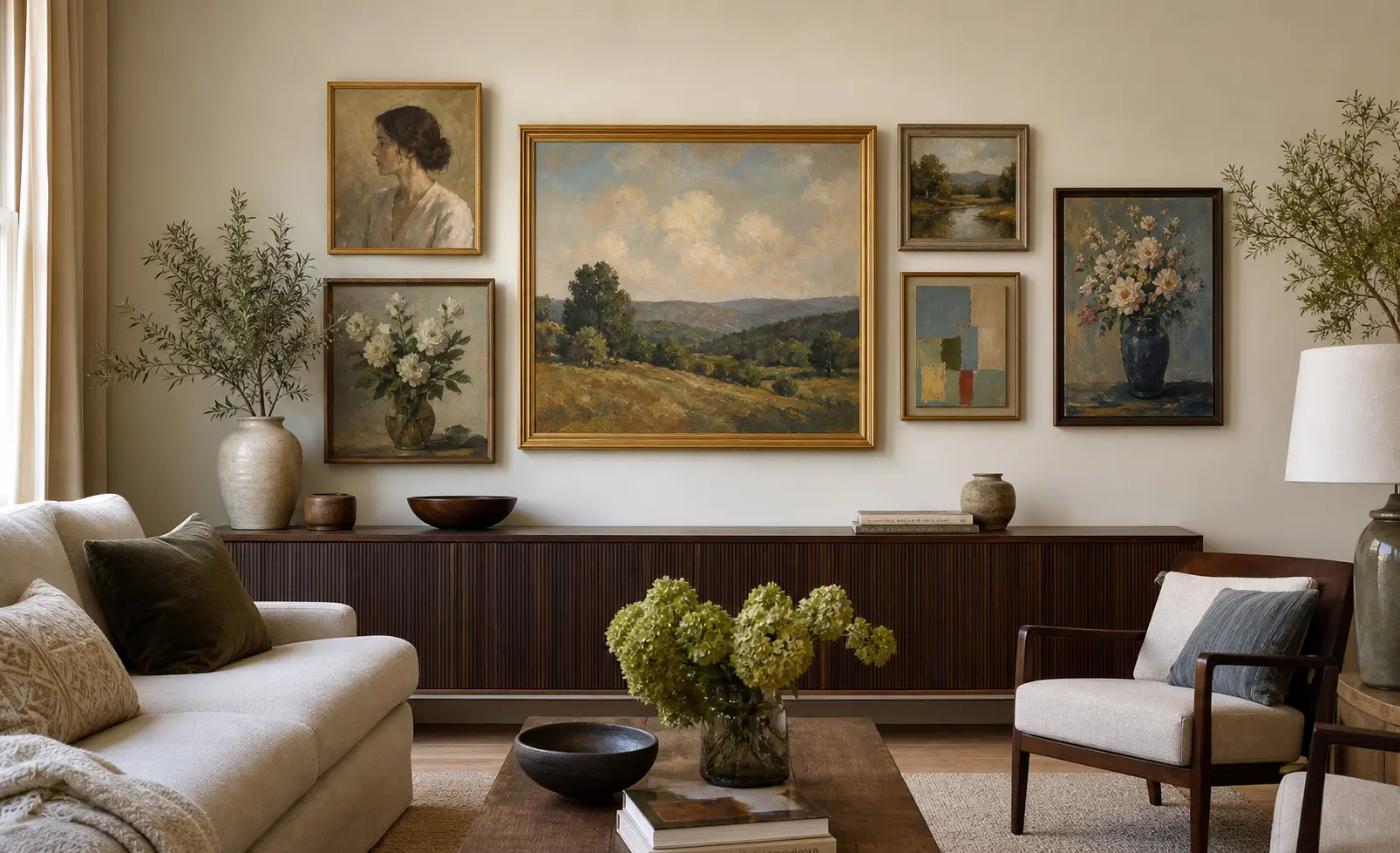
An oil painting gallery wall works when the collection reads as one composition without making every painting look identical. Start with one anchor painting, repeat two or three visual cues—such as frame tone, color temperature, or subject—and plan the whole group against the wall and furniture below it. The refreshed 2026 gallery-wall trend is more personal and collected than a perfectly matched print set, which makes portraits, landscapes, florals, and still lifes especially useful.
The practical goal is not controlled chaos. It is a wall with a clear outer shape, deliberate spacing, and enough variation to reward a closer look. This guide shows how to choose oil paintings, test a layout, coordinate frames, and avoid the most common scale mistakes before anything is hung.
Why Oil Painting Gallery Walls Feel Current Again
Recent interiors are moving away from walls that look purchased as a single matching set. Etsy describes its “Everyday Exhibits” direction as a layered, evolving display of art and objects, while current interiors coverage points to relaxed gallery walls and maximalist layering. The useful idea is not to chase a short-lived label. It is to build a display that can grow without losing its structure.
Oil paintings suit this approach because their surfaces respond differently to daylight, side light, and evening lamps. A small portrait can provide detail, a landscape can create breathing room, and a floral or still life can carry color across the group. Visible brushwork adds another shared element even when the subjects differ. These are visual qualities, not proof that every textured canvas is hand painted, so buyers should still inspect material and seller evidence carefully.
| Gallery-wall element | What it controls | A useful starting choice |
|---|---|---|
| Anchor painting | Where the eye begins | The largest work or the piece with the strongest contrast |
| Outer shape | Whether the group feels stable | A loose rectangle, square, or rising staircase line |
| Repeated cue | Why different works belong together | Frame color, warm palette, subject rhythm, or similar paint texture |
| Spacing | Whether the wall reads as a collection | One consistent gap adjusted for the room and frame sizes |
1. Choose One Anchor Before You Choose The Rest
The anchor does not have to sit in the exact center, but it should give the arrangement a visual center of gravity. Use the painting you most want to see from the room entrance or main seat. A wide landscape can establish a horizontal base above a console. A vertical portrait can create a strong center for a stair wall. A bright floral can become the color key for several quieter works.
Measure the wall and the furniture before selecting the anchor. A group that is too narrow above a long sofa will look disconnected, while a group that spreads beyond the furniture without a clear reason can feel unstable. The living room oil painting guide and large-wall size guide can help when the decision is between one oversized focal painting and a multi-piece arrangement.
2. Mix Subjects, Then Repeat A Visual Thread
A gallery wall becomes more interesting when every work does not depict the same thing. Try pairing a portrait with a landscape, a floral still life, and one quieter architectural or abstract image. The collection can cross periods and moods if one or two cues repeat.
- Repeat color temperature: several warm earths, softened greens, or cool blue-greys can connect unlike subjects.
- Repeat frame tone: black, dark wood, warm gilt, or pale natural wood can appear more than once without covering every piece.
- Repeat movement: curved poses, diagonal paths, or loose floral shapes can guide the eye through the arrangement.
- Repeat surface character: visible brushwork can connect paintings even when their palettes differ.
Avoid forcing famous-artist reproductions into a false historical story. A hand-painted reproduction is a new painted work made from a reference, not the original artwork. Choose pieces for the visual relationship they create on your wall, and use accurate product descriptions when discussing artists or historical works.
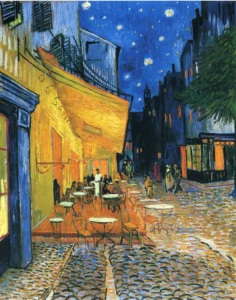
Café Terrace at Night - Nocturnal - Textured
Cafe Terrace at Night (Master Studio)Est. Value Price range: $400.00 through $1,500.00
Portrait of Lina Campineanu (1878) - Hand-Painted Oil Reproduction
edouard manet (Master Studio)Est. Value Price range: $340.00 through $1,500.00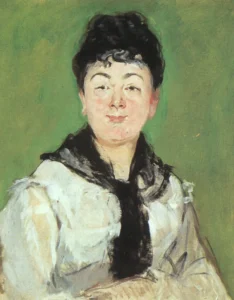
Portrait of a lady with a black fichu (1878) - Hand-Painted Oil Reproduction
edouard manet (Master Studio)Est. Value Price range: $402.00 through $658.00
Portrait of Faure as Hamlet (1877) - Hand-Painted Oil Reproduction
edouard manet (Master Studio)Est. Value Price range: $371.00 through $2,648.00
Browse the Master Artists collection to compare portraits, landscapes, florals, and other painterly directions before building the group. If the wall needs a particular crop, scale, or subject combination, use the custom oil painting path for a project-specific review rather than assuming every requested size or change is automatically feasible.
3. Pick A Layout That Matches The Architecture
A grid is calm and architectural. It works well above a long console, in an office, or in a room where furniture already has strong pattern. An asymmetrical salon arrangement feels more collected and can grow over time. A rising layout follows a staircase. A vertical stack can make use of a narrow wall between windows or doors.
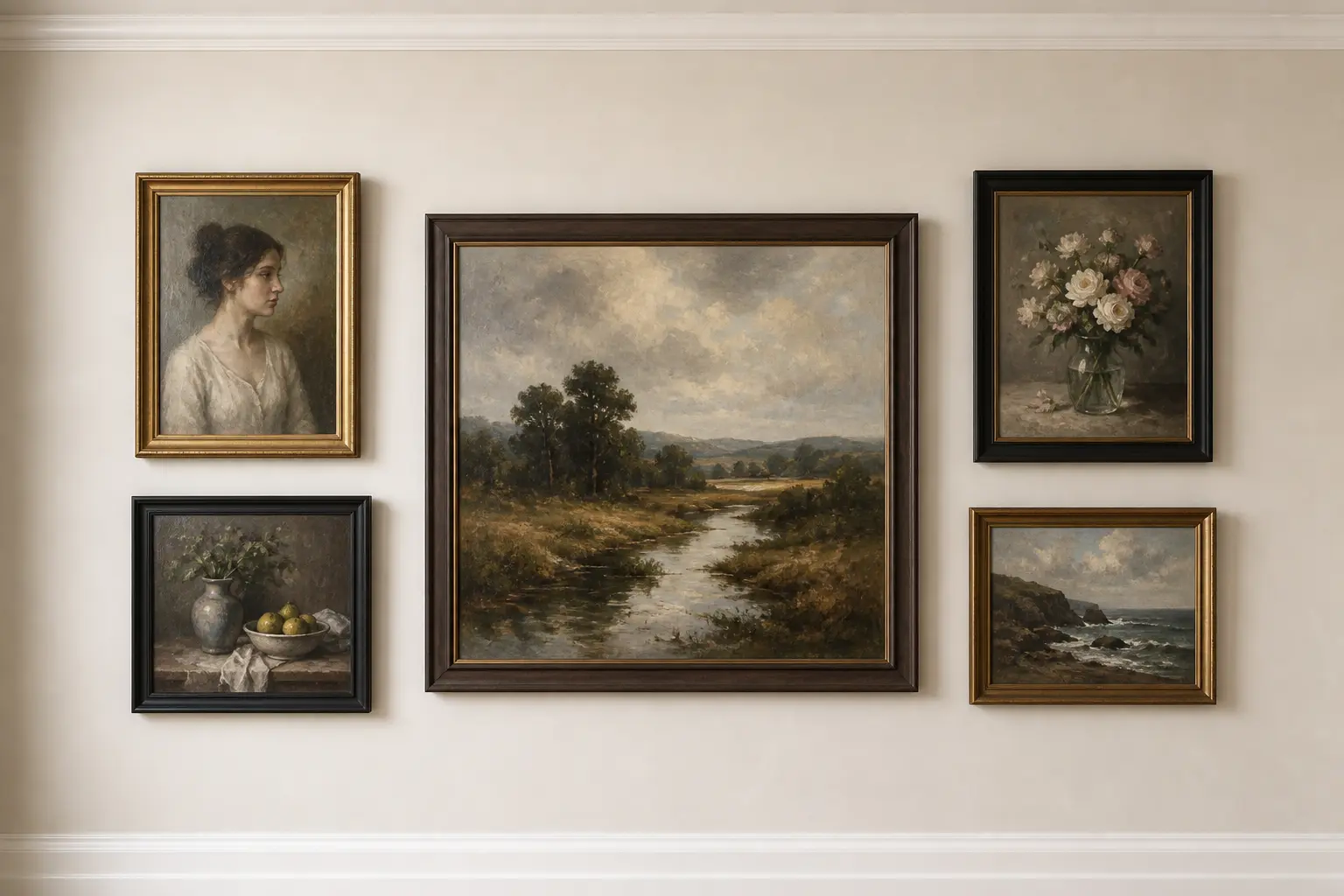
Plan the outer silhouette before fine-tuning individual gaps. Step back and look at the group as a single block. If one frame projects far beyond the rest, decide whether it creates useful tension or simply makes the group feel accidental. Door frames, windows, ceiling slopes, switches, and lamps are part of the composition and should be measured before hanging.
4. Test The Full Arrangement On The Floor Or With Paper
Do not improvise one nail at a time. Lay the paintings on a clean protected floor, or trace the frame sizes onto paper and tape those templates to the wall. Mark each hanging point on the paper so the final transfer is easier. Photograph two or three layouts from the normal viewing position and compare them later; the best composition is often clearer in a photograph than while you are moving frames.
Keep the gaps visually consistent, but do not treat one measurement as a universal rule. A small cluster of miniature frames may need tighter spacing than a group of large ornate frames. The wall size, frame depth, viewing distance, and room architecture should decide the final interval.
5. Coordinate Frames Without Making Them Uniform
Matching every frame is the easiest route to order, but it is not the only one. For a collected wall, choose a limited frame vocabulary. You might repeat dark wood twice, warm metallic tone twice, and use one narrow black frame as contrast. If the paintings already contain many strong colors, simpler frames can prevent visual overload. If the art is restrained, a more varied frame mix can add rhythm.
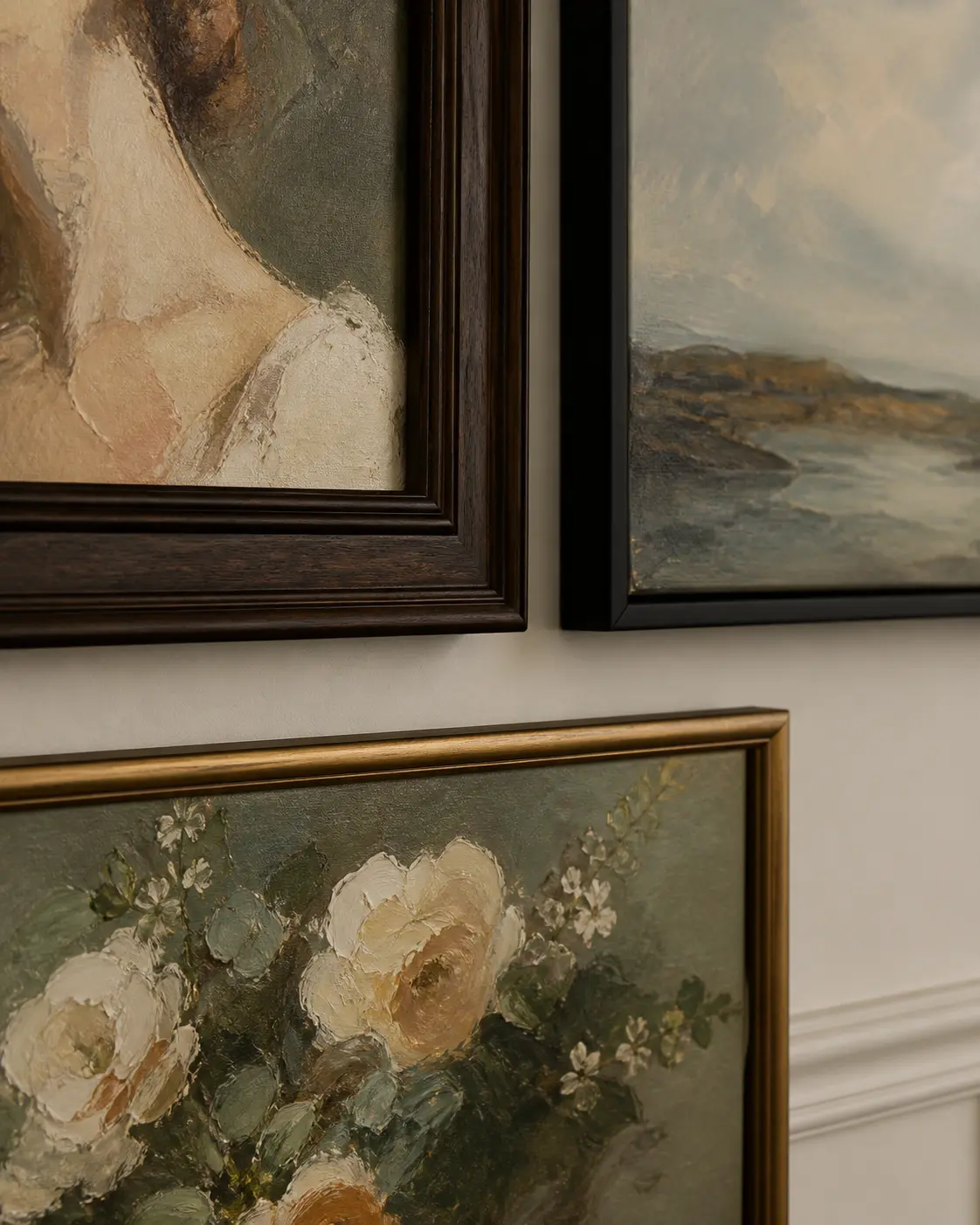
Frame choice also depends on the painting support and condition. A stretched canvas, rigid panel, fragile surface, and loose canvas do not use the same mounting solution. Never allow hardware or glazing to press against raised paint. For those practical choices, continue to the oil painting framing guide.
6. Use Light To Reveal Texture Without Creating Glare
Look at the wall in daylight and after sunset. Side light can make brushwork easier to see, while strong direct light can create glare and flatten dark passages from the main seat. Avoid placing sensitive paintings where sunlight, smoke, cooking residue, or repeated physical contact is likely. If a painting is fragile, valuable, flaking, or historically significant, ask a qualified conservator or experienced framer to assess its display requirements.
A gallery wall often combines surfaces that reflect light differently. Test the whole group, not just the anchor. A glossy dark work beside a pale matte-looking piece may change dramatically between morning and evening.
7. Know When One Large Painting Is The Better Choice
A gallery wall is not automatically better because it is trending. Choose one large painting when the room needs calm, the architecture already has many lines, or a single image deserves uninterrupted attention. Choose a group when you want variety, a display that can evolve, or a way to combine several meaningful subjects.
If you are still deciding, create two paper mockups: one showing the outline of a single large canvas and one showing the gallery-wall group. View both from the doorway and main seating position. This separates a real room decision from an image that only looks good in a close-up inspiration photo.
Oil Painting Gallery Wall Checklist
- Measure the usable wall and the furniture below it.
- Select one anchor painting and one supporting color direction.
- Mix subjects while repeating two or three visual cues.
- Choose a grid, asymmetrical, vertical, or staircase layout.
- Test the complete arrangement with paper templates.
- Check daylight, evening light, reflections, and traffic around the wall.
- Use mounting and framing appropriate to each painting’s support and condition.
Build A Collection That Can Grow
The strongest gallery walls leave room for personal change. Start with a stable anchor and a clear outer shape, then add work only when it strengthens the collection. Use Master Artists to compare painterly subjects, review how to inspect a hand-painted surface, or discuss a room-specific idea through the custom painting page.
Frequently asked questions.
Direct answers for planning a balanced, personal oil painting gallery wall.
Yes. Connect different subjects through repeated frame tones, color temperature, brushwork, or a clear outer layout rather than forcing every painting to share one subject.
No. Matching frames create a formal grid, while a limited mix of repeated wood, black, or metallic finishes creates a more collected look without becoming random.
Trace every frame onto paper, mark its hanging point, and tape the templates to the wall. Check the full group from the doorway and main seating position before installing hardware.
It depends on the room. A gallery wall adds variety and can evolve over time; one large painting creates a calmer focal point and reduces the number of frames and spacing decisions.
Yes, if each work is described accurately. A hand-painted reproduction is a new painting made from a reference and should not be presented as the historical original.