To frame an oil painting safely, first identify whether it is stretched canvas, a rigid panel, or loose canvas; check that the paint and support are stable; then choose a frame deep enough to hold the work without pressing on its edges or painted surface. Many stable oil paintings on stretched canvas are displayed without glazing, but glass or acrylic can provide useful protection in some environments. If glazing is used, it must be held away from the paint with an appropriate spacer.
The right decision is therefore not simply “glass or no glass.” It depends on the painting’s support, surface condition, frame depth, room risks, and value. This buyer-focused guide explains the choices to discuss with a framer before hanging a hand-painted oil painting or reproduction.
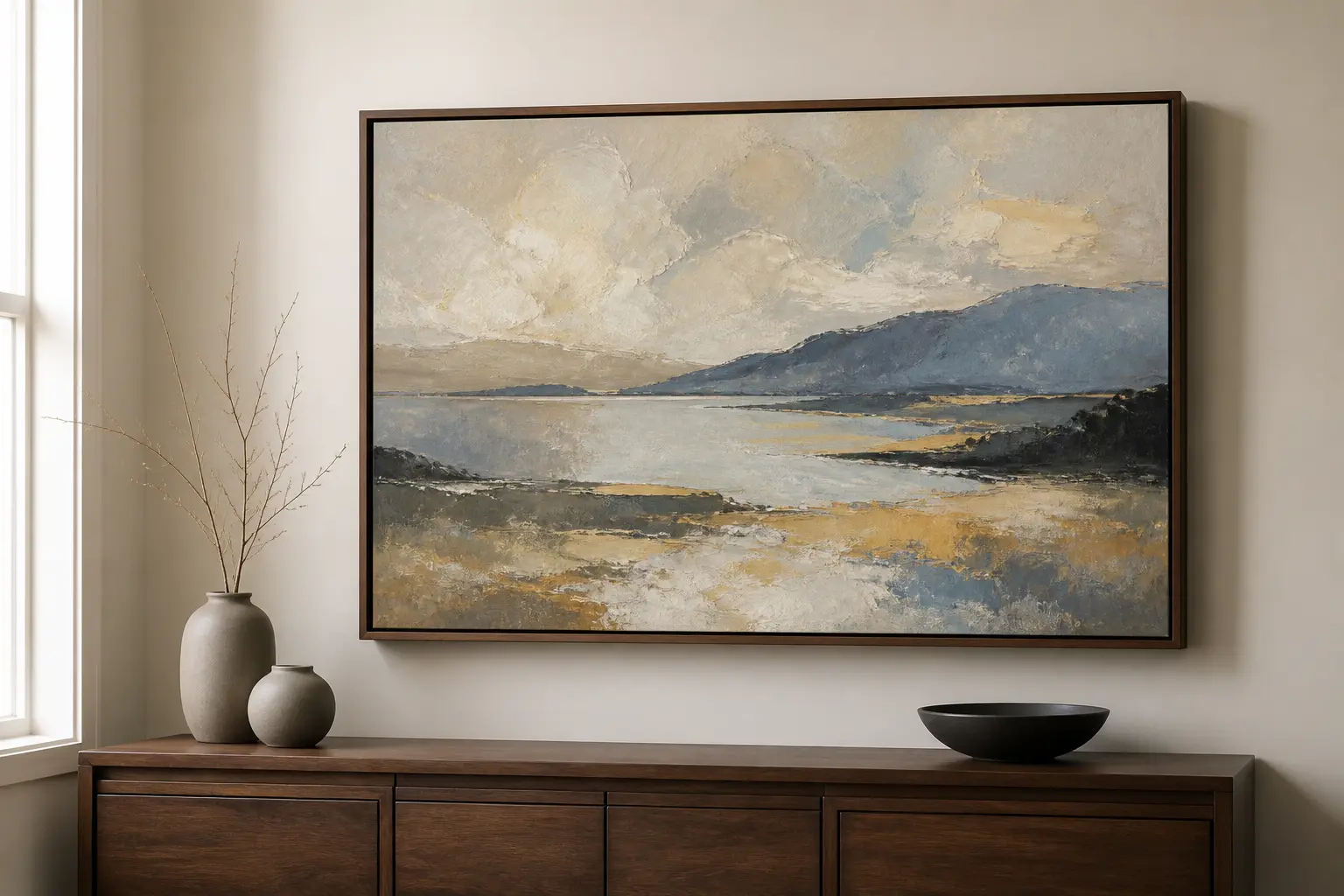
Start By Identifying The Painting Support
“Oil painting” describes the paint medium, not the support beneath it. The work may be painted on stretched canvas, a rigid wood or composite panel, prepared paper, metal, or another surface. A framing method that fits stretched canvas may be inappropriate for a thin panel or loose canvas.
| Painting format | What the frame must do | When to seek specialist help |
|---|---|---|
| Stretched canvas | Support the stretcher securely with enough depth and no pressure on the painted face | Loose canvas, distorted stretcher, flaking paint, or very large size |
| Rigid panel | Hold the panel without abrasion, bending, or excessive compression | Warping, cracks, friable edges, or uncertain material |
| Loose or rolled canvas | Requires a separate stretching or mounting decision before ordinary framing | Always consider an experienced framer; valuable or fragile work may require a conservator |
| Oil on paper | Needs a paper-appropriate mounting and glazing plan | Adhesives, buckling, brittle paper, or direct paint contact with glazing |
Do not scrape, bend, press, or use solvents to test a painting. Canvas and visible texture are clues about a physical object, not complete authentication. If you are still deciding whether a work is painted or printed, use the non-destructive checks in how to tell if an oil painting is hand painted.
Does An Oil Painting Need Glass?
Many stable oil paintings on stretched canvas are framed and displayed without glazing so the painted surface remains directly visible. That familiar residential approach is not a universal conservation rule. The Canadian Conservation Institute notes that protective glazing can reduce risks from dirt, pollutants, physical contact, and environmental fluctuation, particularly for fragile or vulnerable surfaces.
If glass or acrylic is included, it must never touch the paint. Raised brushwork and impasto need clearance, and the frame must be designed with a spacer and sufficient depth. Glazing also changes weight, reflections, cleaning, and breakage risk. Large works may require acrylic or another specialist solution, but the appropriate material depends on the frame, condition, environment, and professional assessment.
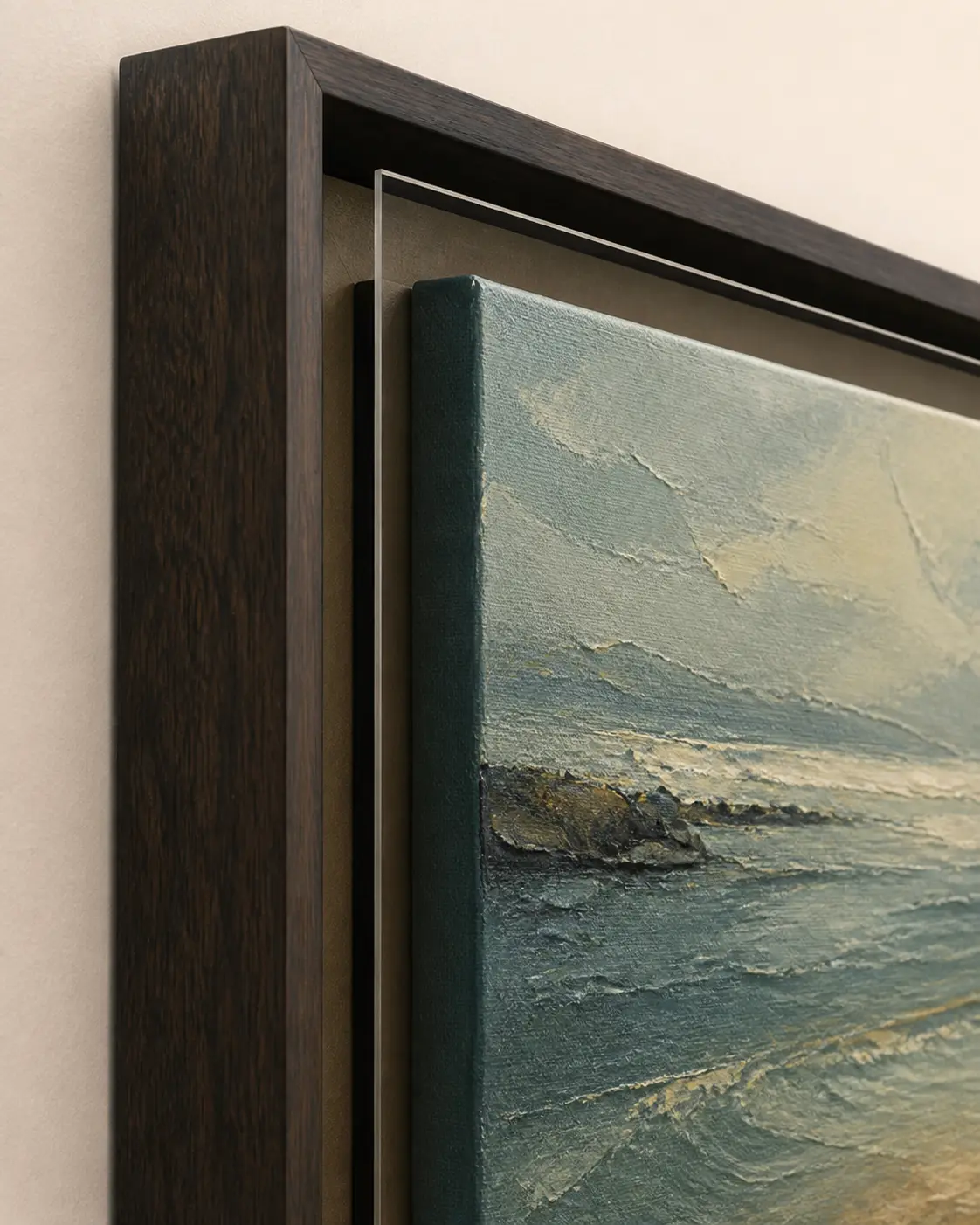
Choose Between A Traditional Frame, Floater Frame, Or Unframed Edge
Traditional Rebate Frame
A traditional frame overlaps a small part of the painting edge and can suit portraits, landscapes, still lifes, and historical-style reproductions. The frame rebate must be deep enough for the stretcher or panel, and contact points should not abrade painted edges. Ornate profiles can strengthen a formal work, but they also add visual weight and finished dimensions.
Floater Frame
A floater frame leaves a narrow visual gap around the canvas, making the entire painted edge visible and giving contemporary work a lighter outline. It is often effective for abstract, modern, and strongly textured paintings. The gap should look deliberate, and the canvas must sit squarely; uneven clearance becomes obvious.
Gallery-Wrapped Or Finished Edge
A stretched canvas with clean, intentionally finished edges may be displayed without an outer decorative frame. This reduces visual weight and can work in a modern room. The exposed edges receive less protection from knocks, handling, and dust, so location matters. “Unframed” should not mean unsupported or hung from unsuitable hardware.
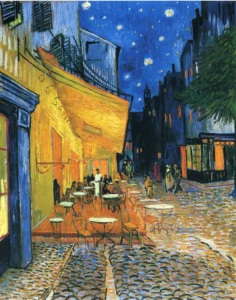
Café Terrace at Night - Nocturnal - Textured
Cafe Terrace at Night (Master Studio)Est. Value Price range: $400.00 through $1,500.00
Portrait of Lina Campineanu (1878) - Hand-Painted Oil Reproduction
edouard manet (Master Studio)Est. Value Price range: $340.00 through $1,500.00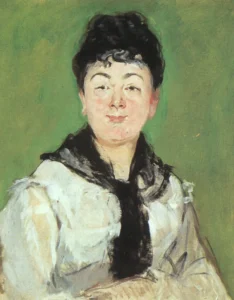
Portrait of a lady with a black fichu (1878) - Hand-Painted Oil Reproduction
edouard manet (Master Studio)Est. Value Price range: $402.00 through $658.00
Portrait of Faure as Hamlet (1877) - Hand-Painted Oil Reproduction
edouard manet (Master Studio)Est. Value Price range: $371.00 through $2,648.00
The Master Artists collection provides different compositions and room moods to compare before choosing a frame direction. A hand-painted reproduction remains a new painted work made from a reference; its frame should support the object you own rather than imply that it is the historical original or museum-endorsed.
Match Frame Style To The Painting Before Matching The Room
Start with the painting’s contrast, edge activity, period feeling, and surface. Then consider the wall color, furniture, metals, and woods in the room. A frame that matches the sofa perfectly but overwhelms the painting is not a successful choice.
- Dark wood or black: can contain a bright palette and give a landscape or portrait a clear boundary.
- Warm metallic finish: can echo warm passages and formal subjects, but too much ornament may compete with delicate detail.
- Natural wood: often softens contemporary, floral, landscape, or earth-toned work.
- Minimal floater: keeps attention on painted edges and texture.

View samples next to the painting in the actual room if possible. Frame finishes change under daylight and warm evening lamps, just as paint color and texture do. For a group of works, the oil painting gallery wall guide explains how to repeat frame tones without making every frame identical.
Check Fit, Clearance, And Back Protection
The painting should sit securely without being squeezed. Its face should not rub the frame lip, and securing hardware should attach to the frame system rather than puncturing the front or forcing the support. The Canadian Conservation Institute recommends protective backing boards for paintings, especially canvas works, because the back is vulnerable during handling and display.
Ask the framer what will touch the painting, how the work will be held, whether a backing board is appropriate, and how the finished piece will be hung. For a large canvas, confirm finished weight, frame depth, access route, and wall hardware before finalizing the order. The extra-large oil painting guide covers scale and handling questions, while the current shipping policy is the right place for DafenArts shipping information.
Avoid These Common Framing Mistakes
- Letting glass or acrylic touch the paint surface.
- Choosing a shallow frame that compresses the stretcher or panel.
- Using nails, tape, or adhesive directly on a valuable or fragile support without professional guidance.
- Assuming every oil painting must be unglazed or every fragile painting must use the same enclosure.
- Ignoring flaking paint, a warped panel, torn canvas, or loose stretcher keys before framing.
- Hanging a heavy finished frame from hardware or a wall fixing that has not been assessed for the load.
- Placing the work beside smoke, cooking residue, repeated splashes, or strong direct sunlight.
When To Use A Conservator Instead Of A Standard Framer
An experienced framer can handle many stable contemporary paintings and reproductions. A conservator should assess the work when paint is lifting or flaking, the support is torn or distorted, the frame may be historically important, the painting is valuable or irreplaceable, previous repairs are failing, or the environment creates unusual risks.
Do not clean, varnish, flatten, restretch, or glue a fragile work as part of a casual framing project. Conservation treatment depends on the materials and condition. The purpose of this guide is to help you ask better questions, not to diagnose or repair a damaged painting.
Questions To Ask Before Approving The Frame
- What is the painting support, and is it structurally stable?
- Will any frame edge, hardware, spacer, glass, or acrylic touch the paint?
- Is the frame deep enough for the stretcher, panel, backing, and any glazing?
- How will the painting be secured without damaging the support?
- Does the finished weight require different wall hardware?
- Can I review frame-corner samples beside the painting in room light?
- Does the condition require a conservator before framing?
Choose The Painting And Frame As One Wall Object
A frame is both a design decision and a protective structure. Identify the support, check the condition, decide whether glazing is appropriate, preserve clearance around the paint, and judge the finished piece at its real viewing distance. Browse Master Artists for painting directions, use the custom oil painting page for a project-specific request, and confirm framing or shipping details rather than assuming one option applies to every order.
Frequently asked questions.
Direct answers about glass, floater frames, fit, backing, and professional assessment.
Many stable oil paintings on stretched canvas are displayed without glazing, but glass or acrylic can protect vulnerable works or risky environments. If glazing is used, a spacer must keep it away from the paint surface.
Choose a frame deep enough for the stretcher that holds the canvas securely without pressing on the painted surface. Traditional and floater frames can both work when their fit and mounting suit the painting.
Yes, a floater frame often suits stretched canvas and leaves the painted edge visible. The canvas should sit squarely with an intentional gap and secure mounting.
A suitable backing board can protect the back of a canvas painting during handling and display. The material and attachment method should be selected for the painting and frame rather than improvised.
Seek a conservator when paint is lifting or flaking, the support is torn or warped, the existing frame may be historically important, or the work is valuable, fragile, or irreplaceable.