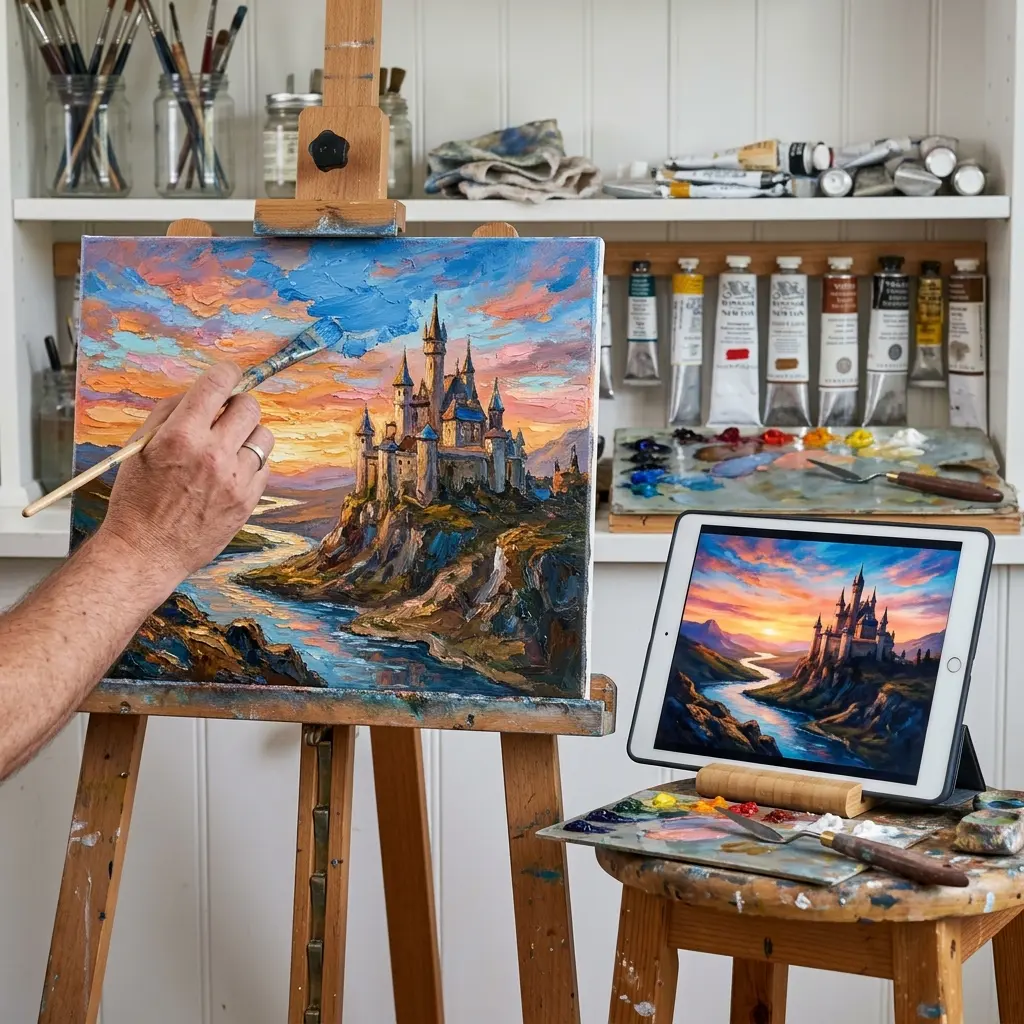
An AI-generated image can be a strong starting point for a hand-painted oil painting, but it should be treated as a reference brief, not as a file to copy pixel by pixel. The best results come when the buyer explains what the image is meant to become: a physical canvas with brushwork, texture, room scale, and a clearer subject hierarchy than the generated file may show on screen.
Short answer: yes, an AI-generated image can be turned into a hand-painted oil painting when the image can be used as a reference and the brief is clear. Before ordering, confirm the right to use the image, the subject, crop, aspect ratio, target size, detail priorities, and anything that should be simplified for paint. The finished work should be described as a new hand-painted interpretation from an AI reference, not as a printed AI image or a guaranteed exact copy.
Request a custom review for your AI image
Quick Commission Checklist
Before asking for a quote, prepare the AI image like a custom painting brief. Send the reference file, the platform or source context if it matters, the wall size or room use, the preferred crop, and a short list of what should stay faithful. Also mark anything that should change: extra fingers, broken text, logos, tiny background objects, harsh digital glow, or details that look attractive on screen but would not read well in oil paint.
This small checklist helps the studio separate two questions. First, is the image suitable to use as a reference? Second, how should it become a physical painted canvas with brushwork and texture? The clearer those answers are, the easier it is to review the order, plan the size, and avoid promising a pixel-exact copy of a generated file.
Start By Separating The Idea From The File
Most AI images look finished at first glance, but many contain small inconsistencies: soft hands, unreadable objects, impossible fabric folds, strange light sources, or decorative details that only work at thumbnail size. A painter can use the mood, palette, composition, and subject direction, but the studio still needs to decide what belongs on a real canvas and what should be cleaned up before painting starts.
That is why the first step is not asking for an instant quote. The first step is naming the main idea. Is the image a portrait concept, a fantasy landscape, a floral wall piece, a modern abstract, a pet scene, or a mood board for a room? Once the subject is clear, the reference becomes easier to translate into oil paint.
Check Rights, People, Brands, And Platform Terms
AI image tools have different terms, and copyright rules around AI-generated material can be complex. DafenArts can review an image as a painting reference, but buyers should avoid treating every generated image as automatically cleared for commercial reproduction. The safer approach is to check the platform terms, avoid recognizable copyrighted characters, avoid logos and brand marks, avoid celebrity likenesses, and use images that the buyer is comfortable sharing for a custom commission.
If the image was generated to imitate a living artist, a current brand, a film character, or a protected design, it is better to rewrite the brief around visible traits instead of asking for a direct imitation. For example, “warm evening light, loose floral brushwork, and a calm blue-green palette” is a safer painting direction than naming a living artist or protected character as the target.
Decide What The Painter Should Keep
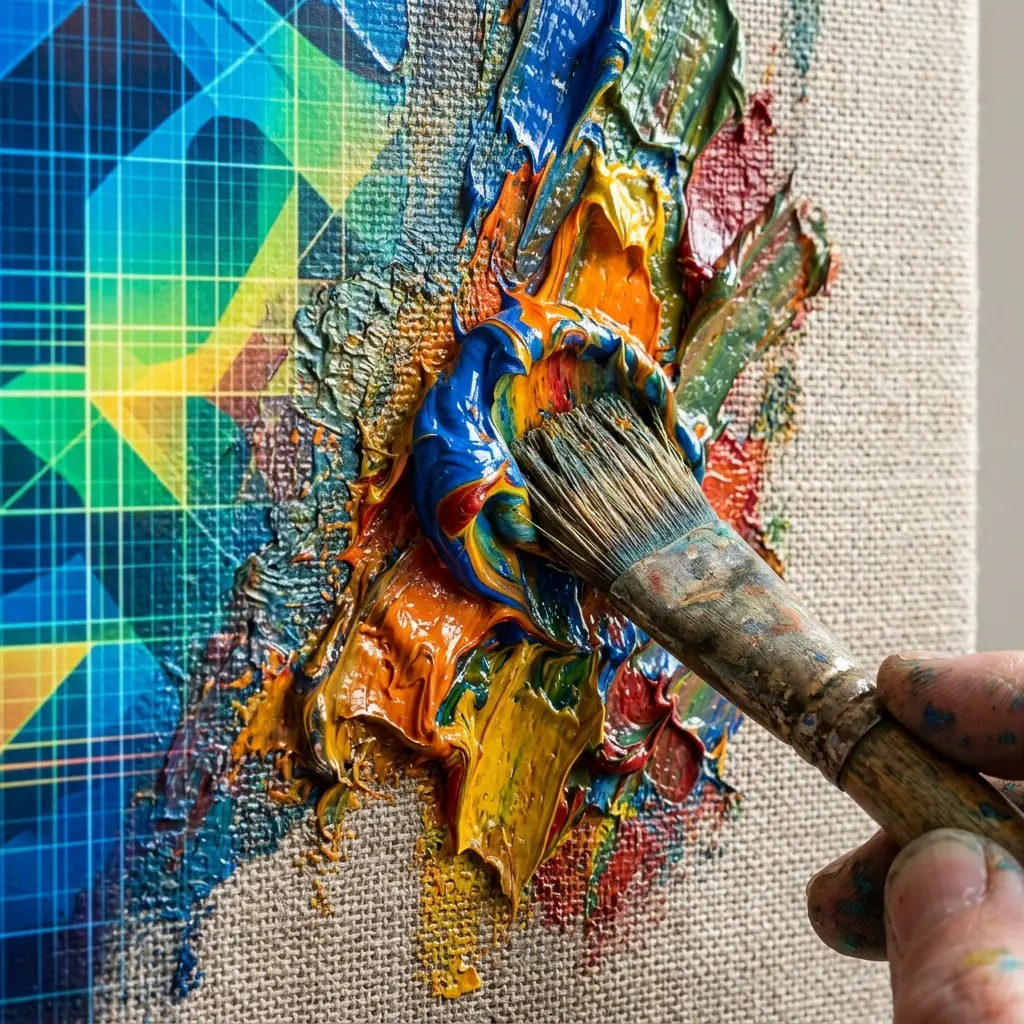
An AI image often contains more information than a hand-painted canvas needs. A buyer should mark the elements that matter most: the person or object, the pose, the background mood, the color family, the room use, and the amount of texture. If everything is equally important, the painting can become crowded. If the brief has priorities, the painter can make better decisions about edges, brush direction, and detail.
| Decision | What to send | Why it matters in oil paint |
|---|---|---|
| Main subject | The person, pet, landscape, room mood, or object that must stay central | The painter can keep the focal area clear and avoid overworking secondary details |
| Crop and ratio | Preferred vertical, square, horizontal, or panoramic format | A canvas has fixed proportions, so the AI image may need cropping or extension |
| Target size | Wall size, room use, or approximate canvas dimensions | Small details behave differently on a large hand-painted surface |
| Style direction | Palette, softness, brushwork, realism level, or decorative mood | Oil paint creates physical texture rather than digital glow or filter effects |
| What to simplify | Text, logos, extra fingers, strange background objects, or tiny generated patterns | Simplification helps the final painting look intentional instead of AI-noisy |
Use AI As A Reference, Not A Printing Shortcut
A digital AI image can be printed directly, but that is a different product decision. A hand-painted oil painting is built with paint, brush pressure, canvas texture, and human interpretation. The value is not that every pixel survives. The value is that the image becomes a physical painted object with surface movement, visible handling, and a scale that fits the room.
For buyers comparing options, this distinction matters. If the goal is exact digital accuracy, a print may be the closer match. If the goal is wall presence, brushwork, a custom size, or a more human interpretation of the image, a hand-painted oil painting is the stronger direction.

Asparagus by Edouard Manet - Hand-Painted Oil Reproduction
Asparagus painting (Master Studio)Est. Value Price range: $393.00 through $1,500.00
The Seine near Argenteuil - Serene Waters - Textured Oil
Argenteuil river landscape reproduction (Master Studio)Est. Value Price range: $393.00 through $725.00
The Sea, Port in Amsterdam - Maritime Scene - Textured Canvas
claude monet (Master Studio)Est. Value Price range: $393.00 through $725.00
The Sea at Amsterdam - Nautical - Textured Oil
claude monet (Master Studio)Est. Value Price range: $362.00 through $695.00
Plan Size Before Asking For A Quote
AI images are usually generated for screens, not walls. A square image may not fit above a sofa. A vertical portrait may feel narrow in a hotel hallway. A wide fantasy landscape may lose important detail if it is forced into a small canvas. Before sending a custom request, decide where the painting will hang and how far people will stand from it.
Large canvases need cleaner composition because viewers see broad shapes first. Smaller canvases need fewer tiny elements because delicate generated details can become muddy in paint. If the AI image has complex architecture, jewelry, patterned fabric, or small text, the brief should say which details must remain and which can be reduced.
Ask For A Painterly Interpretation
The best AI-to-oil-painting brief usually includes one sentence about interpretation. A buyer might ask for a softer background, stronger light on the subject, fewer decorative objects, more natural hands, a warmer palette, or visible brushwork in the sky and clothing. These instructions help the painter improve the image instead of preserving errors that came from generation.
Brushwork should also match the image purpose. A pet or portrait reference may need cleaner facial handling. A landscape can accept looser marks in trees, water, and sky. An abstract reference can use heavier paint movement and freer color transitions. The final surface should support the subject instead of applying the same texture everywhere.
Know When An AI Reference Needs Revision First
Some AI images are not ready for painting. If the subject has unclear anatomy, unreadable objects, awkward shadows, or a background that changes logic across the image, the buyer should revise the reference or write a clearer brief before ordering. A painter can interpret, simplify, and improve, but the commission becomes harder when the source image gives mixed instructions.
Images with visible text are a common example. AI-generated lettering often looks convincing from far away and broken up close. Instead of asking the painter to copy the broken letters, decide whether the text should be removed, replaced with readable wording, or treated as abstract texture. The same rule applies to logos, signatures, brand marks, and tiny decorative symbols.
Use DafenArts As A Custom Review Path
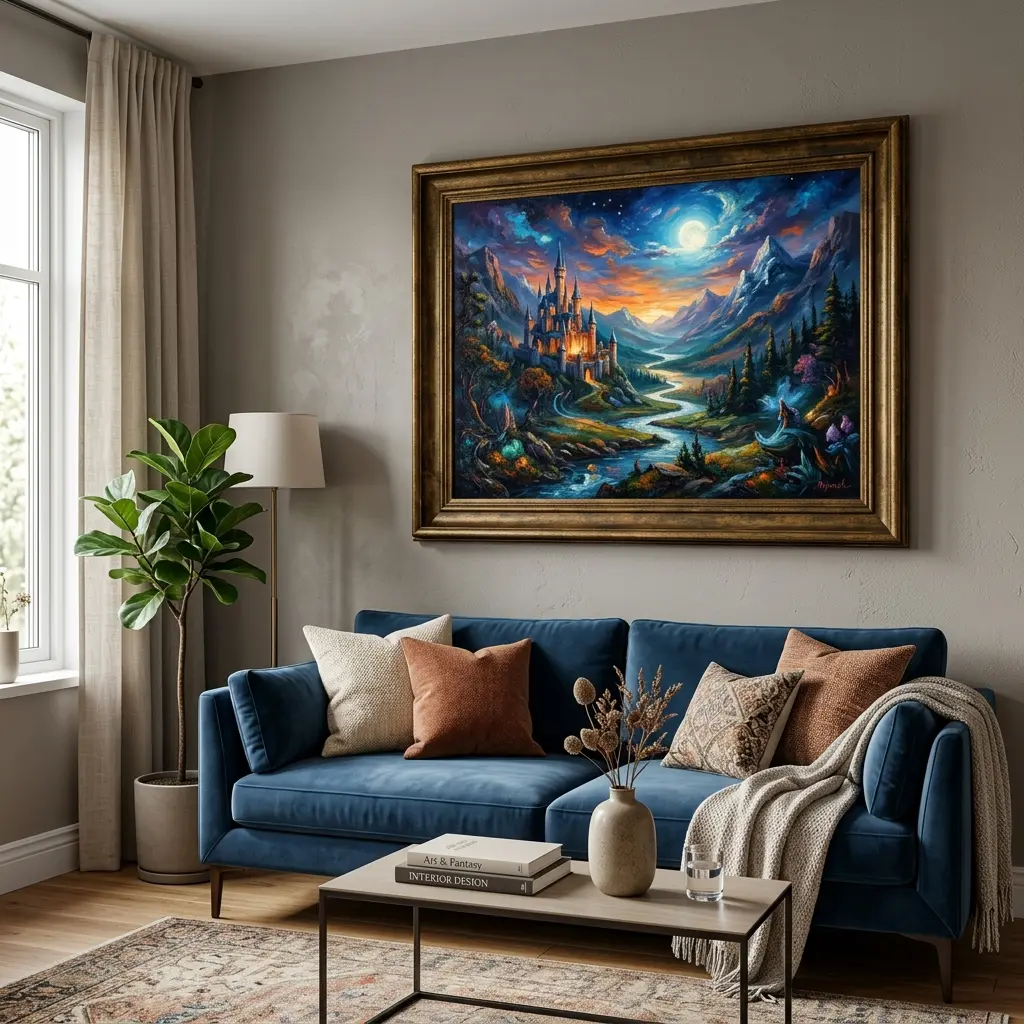
When the AI reference is ready, use the custom oil painting service to send the image, preferred size, crop, room context, and notes about what should change. If the buyer is still deciding between painted texture and image accuracy, compare the giclee versus hand-painted oil painting guide. For material expectations, review hand-painted oil painting on canvas and how to inspect a hand-painted surface.
Buyers who want a classic art direction can also browse the Master Artists product category for composition, color, and subject ideas before sending a custom AI reference. If the request depends on a very large or unusual format, check the shipping policy and treat size as a review item rather than an automatic promise.
Request a custom oil painting quote from your AI reference
AI image to oil painting FAQ.
Direct answers for buyers using AI-generated images as references for custom hand-painted oil paintings.
Yes, when the image can be used as a reference and the brief explains the subject, crop, size, and painterly direction. The finished work should be treated as a new hand-painted interpretation, not as a printed AI file.
No physical painting should be promised as a pixel-exact copy. Oil paint changes edges, texture, tiny details, and light. A clear brief tells the painter what should stay faithful and what can be simplified.
Check that you can use and share the image, then review the subject, crop, target size, visible people, logos, text, brand marks, and generated artifacts that should be removed or improved.
It can be reviewed as a reference, but platform terms and the image content still matter. Avoid images that depend on protected characters, logos, celebrity likenesses, or direct imitation of a living artist.
Send the AI image with the preferred size, crop, room context, and a short note about what should stay faithful and what should be improved. That gives the custom review a practical starting point.
Make The AI Reference Paintable
A good AI reference is not the final artwork. It is a direction for a painted object. When the image, rights boundary, size, crop, and painterly priorities are clear, the custom request becomes easier to review and the final oil painting has a better chance of feeling intentional on the wall.