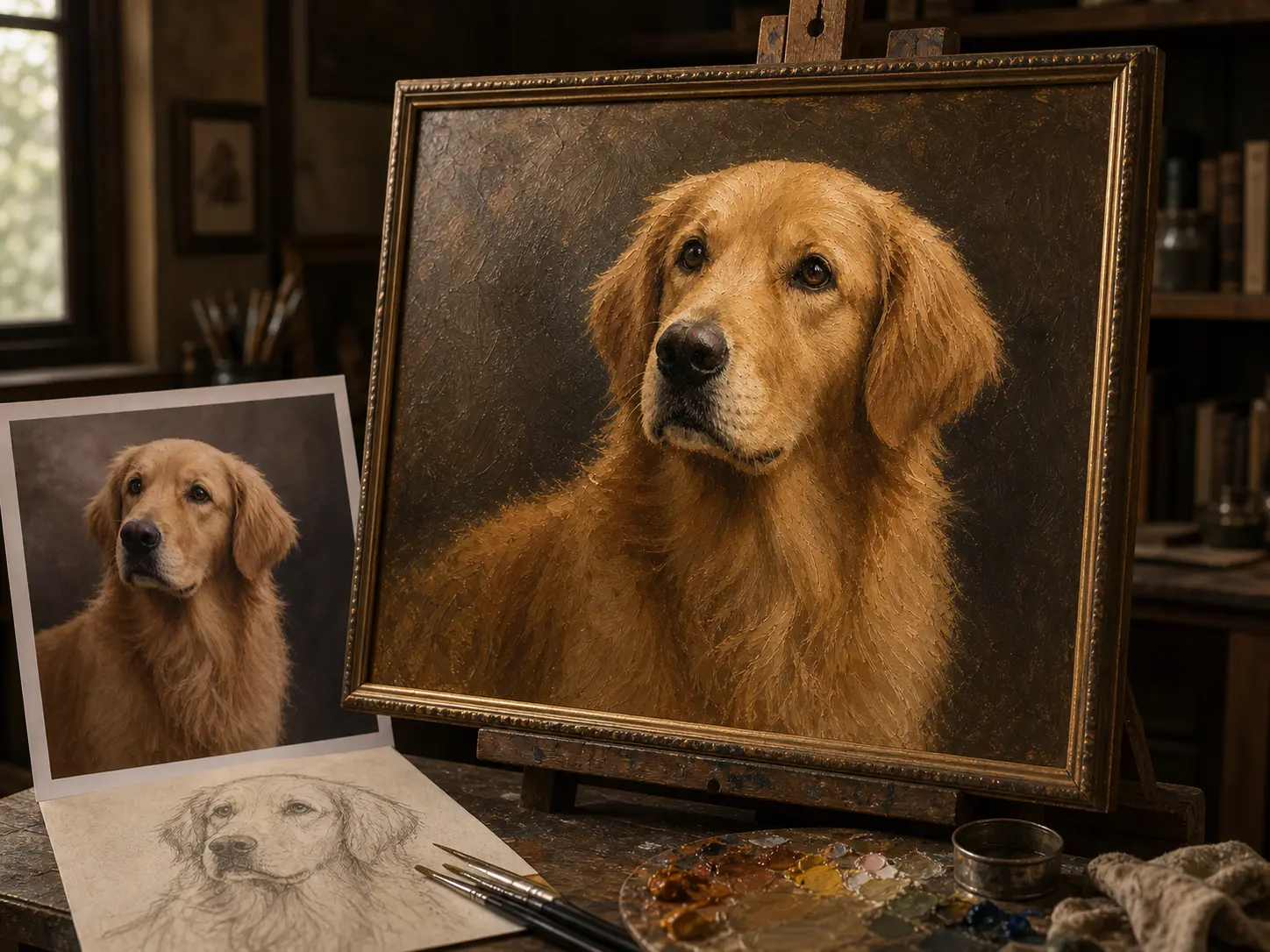
The best pet oil painting from photo usually starts with two choices: the pose that carries the animal’s personality and the background that does not distract from it. Buyers often send whichever phone photo feels emotionally important, but the more useful question is whether that image explains the eyes, muzzle, ears, coat, posture, markings, and wall presence clearly enough for a painter to build a convincing result on canvas.
This guide is for buyers preparing a dog portrait, cat portrait, horse portrait, memorial pet painting, or gift commission. It explains how to choose pose, crop, background, supporting photos, and review expectations before you request a custom pet oil painting from DafenArts.
The Short Answer: Pick The Pose That Feels Most Like The Animal
A strong pet portrait is not only anatomically correct. It should also feel like the specific animal. That usually means the pose must show recognizable expression, posture, and coat behavior. A pretty garden or sofa scene matters less than whether the painter can read the pet’s face and body language clearly.
The goal is a hand-painted interpretation of a pet photo, not a photo filter, printed canvas, or promise that every weak image can be restored into perfect likeness. Clear eyes, muzzle shape, markings, light direction, and crop give the painter a safer starting point. If the photo came from a breeder, photographer, social account, or another third party, confirm that you can use it for a custom painting request.
If you are still deciding which source photo to use, review the photo-selection guide first. The same likeness logic applies to pets, especially around the eyes, muzzle, ear shape, coat markings, and lighting.
Choose The Pose Before You Worry About Decoration
| Pose type | What it does well | Main risk |
|---|---|---|
| Front-facing head study | Strong for likeness, eyes, muzzle, and expression. | Can feel static if the pet’s personality is more playful or active. |
| Three-quarter pose | Balances likeness with movement and body shape. | Needs clear light to avoid losing facial structure. |
| Seated or lying pose | Useful for calm temperament and home display. | Can look heavy if the crop is too tight. |
| Standing or active pose | Shows energy, posture, and breed character. | Harder to paint well if the photo is blurry or taken at speed. |

Asparagus by Edouard Manet - Hand-Painted Oil Reproduction
Asparagus painting (Master Studio)Est. Value Price range: $393.00 through $1,500.00
The Seine near Argenteuil - Serene Waters - Textured Oil
Argenteuil river landscape reproduction (Master Studio)Est. Value Price range: $393.00 through $725.00
The Sea, Port in Amsterdam - Maritime Scene - Textured Canvas
claude monet (Master Studio)Est. Value Price range: $393.00 through $725.00
The Sea at Amsterdam - Nautical - Textured Oil
claude monet (Master Studio)Est. Value Price range: $362.00 through $695.00
1. Expression And Eye Contact Carry The Portrait
In many pet portraits, the eyes decide whether the result feels alive. A painter needs enough information to understand the gaze direction, the wet highlight in the eye, and the shape of the muzzle around it. This is especially important with dark-coated animals, where phone photos often hide the eye area in shadow.
If one photo shows the best body pose but another shows the clearest eyes, send both. Tell the studio which image should control the main likeness and which image should support color or anatomy. That is more useful than forcing one weak photo to do every job.
For dogs, that may mean a reference that keeps the muzzle length, ear set, and eye highlights readable. For cats, it may mean a photo where whisker direction, eye color, and coat markings are not swallowed by shadow. The same rule applies to horses, rabbits, and other animals: the painter needs the features that make this pet recognizably itself.
2. Background Should Support The Animal, Not Compete With It
A detailed background is not always an advantage. Grass, furniture, toys, and household clutter can pull attention away from the animal’s face. Many pet portraits improve when the background is softened, simplified, or reduced to a quiet tonal field that helps the coat and outline stay clear.
This does not mean every portrait must be plain. If the buyer wants a garden setting, favorite chair, or memorial atmosphere, that context can work. The key is that the background should still support the pet instead of taking over the canvas.
3. Fur Texture Needs Readable Light
Light direction matters because fur is not handled like smooth skin. Long fur, short fur, wiry coats, glossy black coats, and white coats all behave differently. A painter needs to see where the coat catches light, where it deepens in shadow, and how markings break across the body. Without that, the result can become muddy or overworked.
If you want to understand how those paint decisions develop, review the photo to oil painting process. Pet commissions follow the same logic of reference review, drawing choices, layered paint handling, and final confirmation.
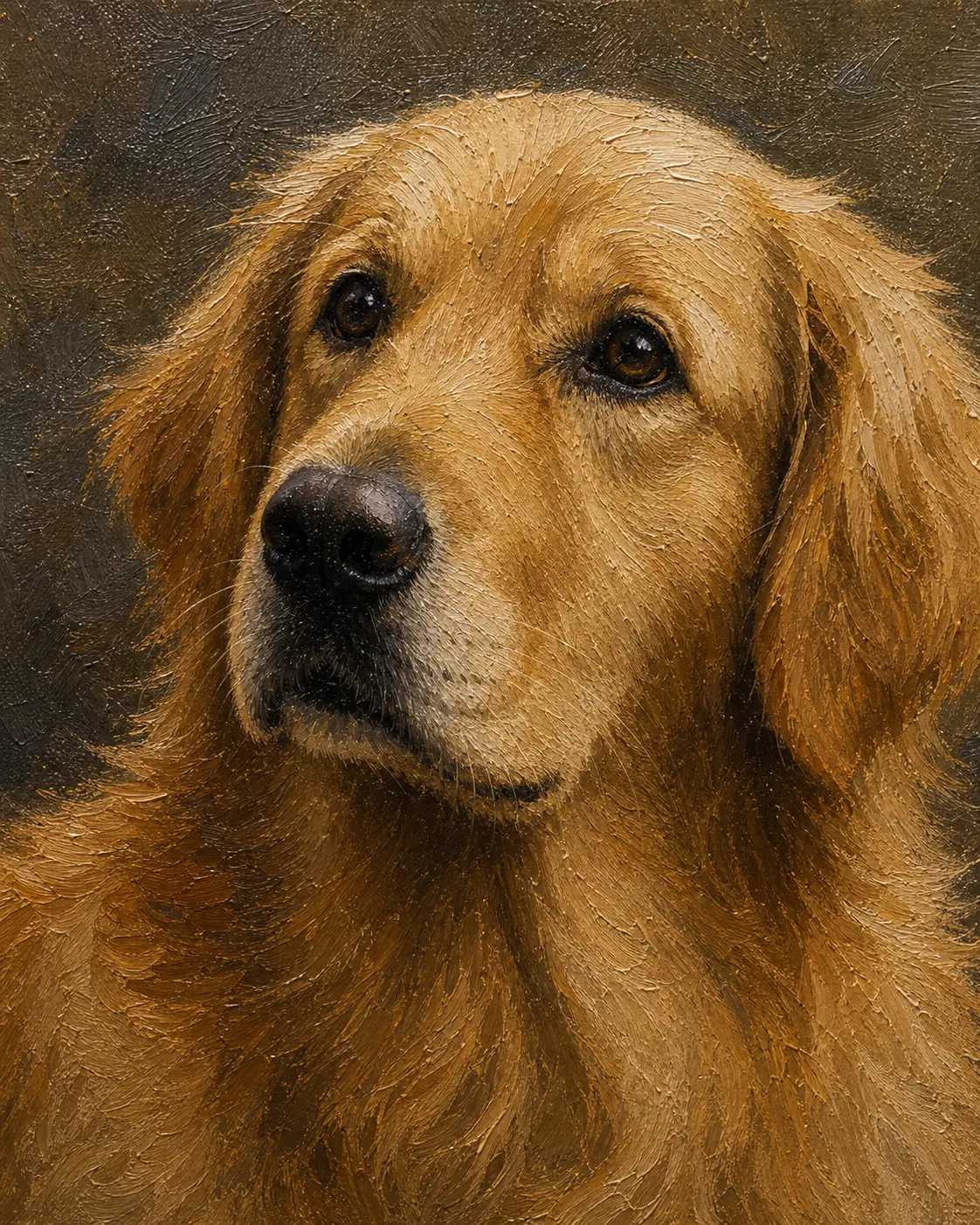
4. Crop And Canvas Shape Should Match The Wall
A close crop can make the portrait feel intimate and emotionally direct. A wider crop can show more of the chest, paws, or body posture. The better option depends on where the painting will hang. A memorial portrait for a small hallway wall often needs a different composition from a large living room pet portrait above a cabinet.
Before the commission starts, tell the studio where the work will be displayed and whether the mood should feel formal, warm, playful, or quiet. The crop should support the room, not only the original camera frame.
5. Memorial Pet Paintings Need Emotional Restraint
When the portrait is memorial in nature, buyers often want the painting to feel affectionate without turning sentimental in a generic way. That usually means choosing a photo where the pet looks most recognizably themselves, not necessarily the most dramatic action shot. A calm, believable pose often carries memory better than an overdesigned scene.
Be clear with the studio about what matters most: expression, posture, coat markings, collar details, or a familiar resting pose. That clarity helps the painter decide what to protect when simplifying the background or adjusting the crop.
6. Multiple Pets Need A Clear Lead Subject
A two-pet or three-pet portrait can work, but it needs more planning than a single head study. Decide whether the animals should share equal attention or whether one pet is the emotional center of the composition. Send separate supporting images if one animal has clearer eyes in one photo and another has better coat color in a different image.
Do not rely on the painter to guess relationships, scale, or personality from a group snapshot alone. Note which pet is larger, which pose matters most, and whether the background should feel like a home setting, a quiet studio field, or a simplified memorial composition.
What To Send With The First Pet Portrait Inquiry
- The strongest likeness photo.
- Supporting images for eye clarity, coat color, body shape, or markings.
- A note about whether the portrait is decorative, commemorative, or a gift.
- The intended wall or room.
- The preferred mood: calm, playful, noble, affectionate, or memorial.
- Any extra photo that clarifies markings, eye color, coat color, or body shape.
- Permission confirmation if the reference photo came from a photographer, breeder, social account, or third party.
- A note about proof/review expectations before the finished portrait ships.
This first message does not need to be complicated. It should give the studio enough information to judge whether the photo is paintable, which details matter most, and whether the crop or background needs adjustment before the work moves into a painting brief.
When To Use The DafenArts Custom Path
Use the custom oil painting service when you want a hand-painted pet portrait rather than a photo filter or generic printed wall piece. The custom path is the right choice when you need a stronger crop, a quieter background, a room-specific size, or a more painterly finish that still protects the animal’s identity.
For studio context, see About DafenArts. For packing and shipment expectations after the portrait is completed, review the shipping policy.
Frequently asked questions.
Direct answers for buyers comparing hand-painted oil painting options, custom details, and the next step before ordering.
The best pose is the one that most clearly shows the pet’s expression and personality. For many commissions, a three-quarter pose or calm seated pose gives the best balance of likeness and presence.
Yes. In many cases, simplifying the background improves the portrait because it keeps attention on the animal’s face and outline.
Phone photos can work well if the eyes, muzzle, ears, coat, and posture are clear. Send more than one image when dark fur, white fur, or fast movement makes details harder to read.
Choose the image that best carries the pet’s identity. A calm pose often gives stronger likeness, while an action pose can work when the photo is sharp and the movement is easy to read.
Yes. A simple background often helps memorial portraits because it keeps the emotional focus on the animal rather than on decorative scene elements.
No. A pet oil painting from photo is a new hand-painted interpretation on canvas. The reference photo guides likeness, crop, and color, but the final work is not a photo filter or printed image.