Hotel lobby oil paintings work best when the buyer defines wall scale, sightlines, lighting, brand tone, subject direction, proof review, and the hotel-side logistics owner before ordering. A lobby painting is not only decorative. It affects first impression, seating mood, viewing distance, and whether the space feels coordinated or generic. Buyers should evaluate the painting as part of a hospitality environment, not as an isolated object.
This guide is for hotel owners, procurement teams, designers, and project buyers who need a practical framework before using the DafenArts wholesale and designer sourcing path. It explains how to think about size, subject, finish, and review steps without relying on invented style claims, vague luxury language, or unsupported project-capacity promises.
The Short Answer: Start With Wall Scale, Then Match Subject To Guest Experience
A lobby painting should feel proportionate from normal guest distance. If the work is too small, the wall looks underplanned. If it is too large or too dark for the room, it can overpower the seating area. Once the wall scale is clear, the next question is subject fit. Calm landscapes, architectural atmospheres, restrained abstracts, coastal scenes, and classically framed reproductions all create different kinds of arrival mood.
The buyer should not choose subject first and scale second. A lobby is a public viewing environment, so proportion and placement usually need to be solved before the final image direction is locked.
Keep project claims practical. A sourcing article can ask for wall dimensions, sightlines, lighting, brand tone, proof images, packing responsibilities, shipping owner, and stakeholder review. It should not promise hotel-grade compliance, fire rating, installation service, project capacity, bulk consistency, or delivery timing unless those details are confirmed for the specific project.
1. Read The Lobby From The Guest’s Distance
A hotel lobby painting is rarely viewed from arm’s length only. Guests see it while checking in, crossing the room, sitting in lounge furniture, or approaching from a corridor. That means the painting needs enough visual weight to read from several distances. Fine detail may matter, but the large shape, contrast pattern, and frame presence matter first.
This is why a buyer should record the wall width, ceiling height, furniture below the painting, and the main viewing path. Those practical details are more useful than saying only “We want something elegant.” For a large lobby wall, also note whether guests see the painting from the entrance, reception queue, elevator corridor, lounge seating, or restaurant threshold. Each route changes how much detail the painting must carry.
2. Subject Choice Should Support The Brand Mood
| Subject direction | Best use case | Main risk |
|---|---|---|
| Landscape or waterside scene | Creates a calm arrival mood and works well in larger framed formats. | Can feel generic if the palette and scale are weak. |
| Architectural or city atmosphere | Useful when the hotel wants structure and urban tone. | Can become visually busy in already detailed interiors. |
| Restrained abstract | Useful when the space needs tonal control rather than narrative subject matter. | Can feel flat if surface depth is not convincing. |
| Classic reproduction route | Works when the project wants a formal, gallery-like impression. | Needs careful frame and scale decisions to avoid looking decorative only. |
Decide Whether The Lobby Needs One Statement Work Or A Coordinated Set
Some hotel lobbies need one large oil painting that anchors the reception wall or seating zone. Others need a coordinated set because guests move through several connected views: entrance, check-in, lounge, elevator corridor, and restaurant threshold. The right choice depends on how the guest experiences the space, not only on how many blank walls are available.
A single statement piece is usually stronger when the lobby already has a clear focal wall and the hotel wants a calm, memorable first view. A coordinated set is more useful when the project needs visual continuity across several zones. In either case, the buyer should keep subject, palette, and frame logic consistent enough that the artwork feels planned rather than collected at random.
For multi-piece hotel sourcing, the inquiry should explain which walls are part of the same visual route. That allows the discussion to separate the main lobby artwork from supporting corridor or lounge pieces, instead of treating every painting as the same priority.
Match The Painting To The Lobby Type
A compact boutique lobby usually needs one strong focal point rather than several competing pieces. In that setting, a single landscape, restrained abstract, or formal reproduction can work if the frame does not make the wall feel crowded.
A business hotel lobby often has more traffic, stronger signage, and faster guest movement. The painting needs clear structure from a distance: a readable horizon, architectural rhythm, broad color block, or calm subject that does not fight with reception lighting and wayfinding.
A resort, coastal, or destination property may need a softer subject family, such as seascapes, gardens, water, mountains, or atmospheric landscapes. The subject should still be chosen through scale and palette, not only theme. A blue coastal painting can feel wrong if it clashes with stone, wood, upholstery, or warm lobby lighting.

Asparagus by Edouard Manet - Hand-Painted Oil Reproduction
Asparagus painting (Master Studio)Est. Value Price range: $393.00 through $1,500.00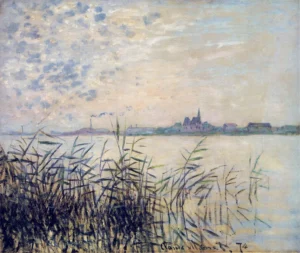
The Seine near Argenteuil - Serene Waters - Textured Oil
Argenteuil river landscape reproduction (Master Studio)Est. Value Price range: $393.00 through $725.00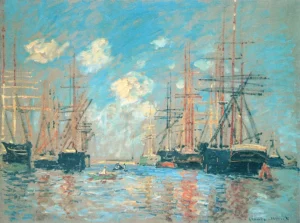
The Sea, Port in Amsterdam - Maritime Scene - Textured Canvas
claude monet (Master Studio)Est. Value Price range: $393.00 through $725.00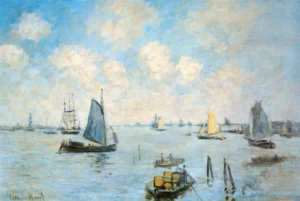
The Sea at Amsterdam - Nautical - Textured Oil
claude monet (Master Studio)Est. Value Price range: $362.00 through $695.00
Use Oil-Painting Criteria, Not Only General Hotel Wall Art Criteria
Broad hotel wall art advice often focuses on color, theme, and brand story. Those are useful, but hand-painted oil paintings add a few extra review points. The buyer should think about brushwork visibility, canvas texture, frame depth, viewing distance, and whether the surface still reads well under lobby lighting.
This matters because an oil painting can look stronger when the surface has enough scale to be seen from the guest path. A small, detailed work may disappear on a wide lobby wall. A very textured work may look impressive under controlled light but too heavy in a narrow reception area. Treat the medium as part of the decision, not an afterthought.
3. Frame And Finish Need To Work With Hospitality Lighting
Lobbies often use warm directional lighting, reflective stone, darker wood, brass accents, or mixed daylight from large windows. The painting should be selected with that lighting in mind. A heavy frame can add authority, but it can also overload a wall if the room already has strong trim and dark finishes. A quieter frame can help when the room has more visual texture around it.
The useful question is not whether the frame looks expensive in isolation. It is whether the frame, painting, wall, and nearby furniture still read as one environment when a guest enters the room.
4. Procurement Should Include A Review Standard, Not Only A Mood Board
Project buyers should define what will be reviewed before final shipment: scale, palette direction, frame tone, subject consistency, and whether the painting still works above the intended furniture or console. This is especially important when more than one painting is being sourced across a hotel project.
For buyers who need a broader artist-style comparison before choosing final direction, the Master Artists collection can help compare surface feel and presentation logic. That should support the sourcing discussion, not replace it.
Build A Review Packet Before Requesting A Quote
A good inquiry gives the studio enough context to review feasibility before production. For a hotel lobby, that means the request should describe the room as well as the artwork. The goal is not to lock every detail on day one. The goal is to prevent a vague mood board from becoming the only specification.
| Project detail | Why it helps | What to avoid |
|---|---|---|
| Wall and furniture dimensions | Helps judge canvas scale and whether one large work or a grouped arrangement is more practical. | Ordering by a generic size formula without checking the actual wall. |
| Lobby photos and lighting notes | Helps the studio understand glare, warm light, daylight, stone, wood, and nearby color. | Expecting exact color decisions from a cropped inspiration image alone. |
| Subject and palette direction | Keeps the painting aligned with the hotel brand and guest experience. | Using a subject only because it looks popular on another hotel page. |
| Review owner and receiving owner | Clarifies who approves proof images and who checks the shipment when it arrives. | Assuming the art supplier controls on-site installation or compliance. |
5. Shipping And Installation Context Matter For Large Lobby Pieces
A lobby work is often larger, heavier, or more public-facing than a residential painting. Packing expectations, hotel receiving, and final arrival condition matter more in that context. Review the shipping policy before finalizing a project path, especially when the painting will move through hotel receiving, staging, and local installation teams.
The sourcing conversation should include who will receive the shipment, how the work will be checked on arrival, and whether the frame and canvas format suit the installation route.
What Hotel Buyers Should Prepare Before Inquiry
- Lobby wall dimensions and ceiling height.
- Photos of the installation wall and the furniture below it.
- The intended mood: calm, formal, contemporary, classical, or atmospheric.
- The number of paintings required for the project, if more than one.
- Any frame tone or finish constraints already set by the interior scheme.
- The stakeholder review process for proof images, sample direction, or final approval.
- The receiving, shipping, and installation owner on the hotel side.
If the lobby painting is part of a multi-room procurement plan, compare this page with the wholesale oil paintings for hotels guide. If the main issue is wall size rather than project sourcing, the extra-large oil painting size guide is the better supporting page.
A Practical Inquiry Format For Hotel Lobby Oil Paintings
A useful first inquiry can be short, but it should be specific. Start with the hotel type, the lobby wall or zone, approximate wall dimensions, desired subject direction, preferred palette, number of paintings, and whether the request is for one lobby feature or a wider hospitality project. Add wall photos when possible.
The inquiry should also name the review owner and the receiving owner. Those two roles are often different in hotel projects. One person may approve the visual direction, while another team handles receiving, local handling, or installation coordination. Naming both avoids confusion later in the process.
When To Use The DafenArts Wholesale Path
Use the wholesale and designer sourcing path when the lobby painting is part of a hospitality project rather than a casual single-piece residential order. That path is more suitable when the buyer needs clearer discussion around room dimensions, quantity, subject direction, review steps, shipping expectations, and project communication.
For brand context, see About DafenArts. For hotel projects that also need formal hand-painted reproduction options, the Master Artists product category is a verified path for browsing artist-led directions.
Frequently asked questions.
Direct answers for hotel owners, designers, procurement teams, and project buyers planning lobby-scale oil paintings.
The answer depends on wall width, ceiling height, furniture below the painting, and normal viewing distance. The work should feel proportionate from across the room, not only in a close-up mockup.
That depends on the brand mood. Landscapes, restrained abstracts, architectural atmospheres, and formal reproductions can all work when they fit the scale and interior language of the lobby.
The frame should be considered early, but it should be judged together with the wall, lighting, and furniture. A frame that looks strong on its own can feel too heavy in the actual lobby.
Specify wall dimensions, sightlines, lobby photos, subject direction, palette, quantity, frame or stretching needs, proof review expectations, shipping destination, and the hotel-side receiving or installation owner.
Review scale, subject fit, frame tone, palette direction, surface visibility, and whether the painting still works in the intended lobby location before it enters the hotel receiving process.