Selecting a hand-painted Rembrandt oil painting reproduction requires an eye for drama, tonal subtlety, and authentic Old Master glazing techniques. Rembrandt van Rijn did not illuminate his subjects evenly. Instead, he carved figures out of mysterious dark backgrounds using theatrical golden light, a technique known as chiaroscuro. On a physical wall, an authentic hand-crafted replica brings unmatched gravity and warmth to traditional and transitional interiors.
Short answer: a collector-grade Rembrandt reproduction must demonstrate physical paint relief in high-key highlights, layered semi-transparent glazes in the shadows, and a canvas proportion that respects Dutch Golden Age compositional balance. When evaluating potential pieces, look for genuine impasto on lace collars and forehead highlights, inspect the optical depth of shadowed background areas under directional lighting, and select an authentic period frame before ordering.
Accurate terminology is essential when purchasing historical art replicas. A hand-painted reproduction is a newly commissioned oil painting created after a historic public domain masterwork. It is not the historical museum canvas, nor should it ever be claimed as museum-certified or an authorized original without direct institutional documentation. Focus on material integrity, paint quality, and craftsmanship to ensure lasting visual satisfaction.
To view available Old Master paintings, explore our Rembrandt collection, browse our Rembrandt reproductions category, or submit architectural inquiries via our custom oil painting studio.
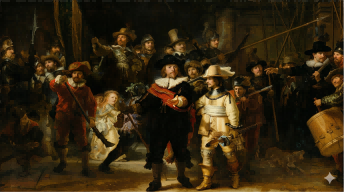
Mastering Chiaroscuro: The Dramatic Play Of Light And Shadow
Chiaroscuro, originating from the Italian words for light (chiaro) and dark (scuro), represents the cornerstone of Rembrandt’s painterly genius. Rather than providing broad daylight across the entire canvas, Rembrandt concentrated intense warm illumination onto key focal features—the intense gaze of a sitter, the wrinkled brow of an elder, or the shimmering gold embroidery of a military sash. Everything else recedes into atmospheric darkness.
In low-quality commercial copies or flat giclée prints, these dark areas appear muddy, flat, and lifeless, resembling uniform slabs of black ink. In contrast, an authentic hand-painted Rembrandt reproduction utilizes the classical Dutch technique of glazing. The painter lays down dark underpainting, followed by multiple semi-transparent amber, umber, and asphaltum glazes. When indoor light hits the canvas, it penetrates through these luminous layers and reflects back, creating shadows that feel infinite, warm, and three-dimensional.
Under close inspection, notice the textural contrast between light and shadow. While the shadowed backgrounds remain silky, smooth, and thinly glazed, Rembrandt applied thick, sculptural oil paint to brightly lit skin tones, lace ruffs, and golden armor. This tactile impasto catches room light naturally, producing real physical highlights that no digital print can duplicate.
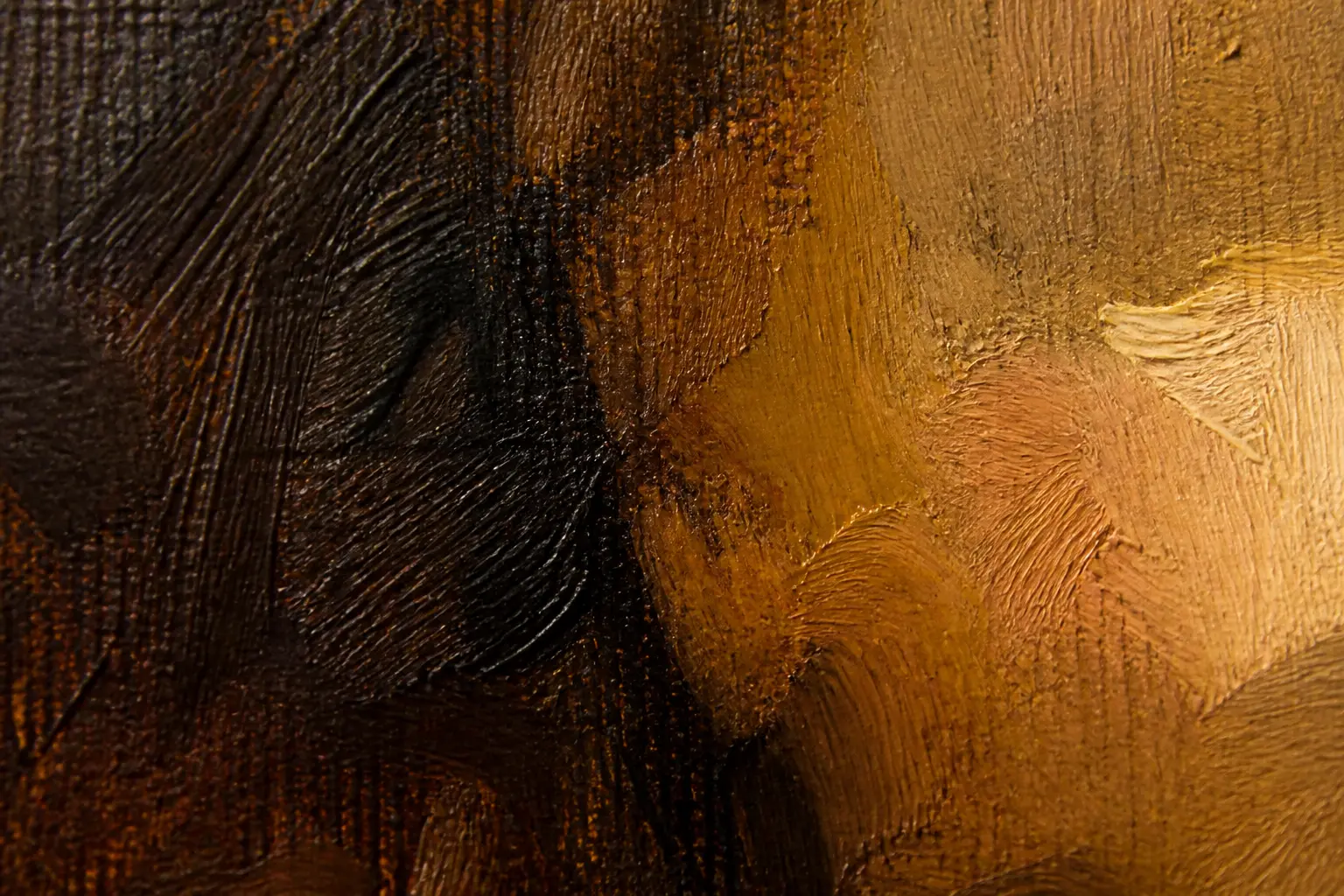
The Dutch Golden Age Palette: Umber, Gold, And Earth Pigments
Unlike Impressionist painters who favored bright primary colors and pastel tones, Rembrandt achieved emotional intensity through a tightly controlled earth-tone palette. His primary colors included yellow ochre, raw and burnt sienna, burnt umber, bone black, vermilion, lead tin yellow, and rich madder lake. This warm chromatic foundation gives his portraits and biblical narratives their timeless, contemplative atmosphere.
When selecting a reproduction for your residence or office, pay attention to the warmth and natural harmony of the color transitions. Cheap modern reproductions often make the mistake of using synthetic acrylic blacks and cold chemical browns that look harsh under residential lighting. Authentic studio reproductions rely on traditional artist-grade oil pigments mixed with refined linseed and walnut oils to preserve the velvety, golden glow characteristic of seventeenth-century Amsterdam studios.
Consider the color temperature of your room lighting before hanging an Old Master reproduction. Rembrandt paintings flourish under warm incandescent or 2700K to 3000K LED lighting. Cool white or daylight-balanced bulbs can flatten the warm amber varnishes, stripping the artwork of its intended intimacy and drama.
| Rembrandt Subject Category | Key Visual Characteristic | Recommended Interior Space | Ideal Lighting Conditions |
|---|---|---|---|
| Civic Guards & History Pieces | Complex group compositions, diagonal lighting shafts, gilded uniforms, dramatic movement | Formal reception halls, executive boardrooms, hotel grand lobbies | Recessed ceiling spots with 30-degree beam spread |
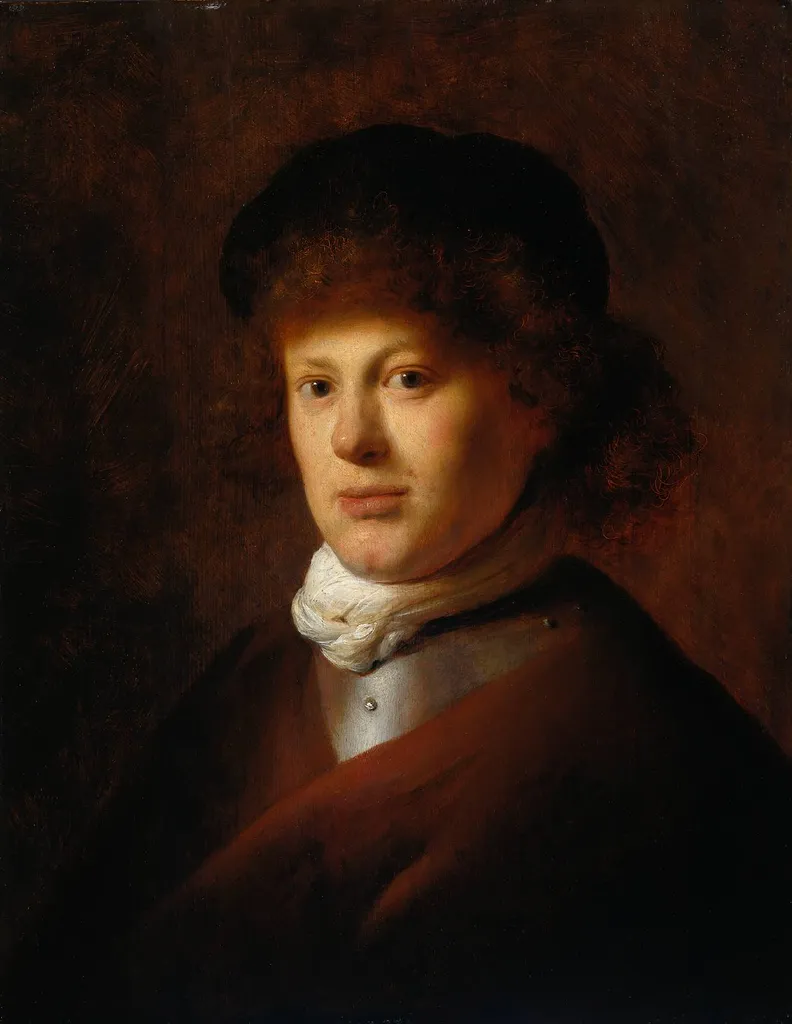
| Intimate Self-Portraits | Deep psychological gaze, heavy impasto on face, muted dark background, beret or soft cap | Private studies, home libraries, personal reading alcoves | Warm accent picture lights mounted above frame |
| Biblical & Narrative Scenes | Emotional storytelling, intense focal glow, rich crimson fabrics, contemplative gestures | Formal dining rooms, fireside seating areas, salon galleries | Indirect ambient lighting paired with warm table lamps |
| Old Master Character Busts (Tronies) | Expressive facial wrinkles, exotic turbans, gleaming gorgets, rough painterly collar handling | Executive office suites, wine tasting cellars, private corridors | Low-glare directional wall washers |

The Jewish Bride - Tender Devotion - Hand-Painted Oil
dutch golden age (Master Studio)Est. Value Price range: $446.00 through $976.00
Lucretia - Sorrowful Devotion - Impasto Oil
baroque (Master Studio)Est. Value Price range: $476.00 through $976.00
The Syndics - Formal Gathering - Textured Canvas
baroque (Master Studio)Est. Value Price range: $454.00 through $7,510.00
The Conspiracy of Claudius Civilis - Rebellion - Textured Canvas
baroque (Master Studio)Est. Value Price range: $446.00 through $946.00
Selecting Canvas Scale And Aspect Ratio For Formal Spaces
Rembrandt composed his major works with deliberate geometric balance. For instance, in monumental masterworks like civic portraits or biblical interiors, the relationship between seated figures, standing companions, and ambient architectural shadows depends on specific height-to-width ratios. Forcing a vertical portrait onto a horizontal canvas or cutting off background space damages the psychological tension of the scene.
When choosing a canvas size for residential or commercial installations, always align with the historical aspect ratio of the original piece. If your target wall requires a custom dimension, commission experienced copyists who adjust the overall scale proportionally rather than cropping out critical compositional breathing room. This ensures that the illuminated head remains the undeniable focal anchor of the room.
For private home libraries, studies, or dining rooms, a medium-to-large canvas measuring 30×40 inches or 36×48 inches commands respectful presence without overwhelming classical furnishings. When placed above a mahogany desk, leather chesterfield sofa, or stone fireplace, allow at least 8 to 12 inches of wall breathing room on either side of the frame.
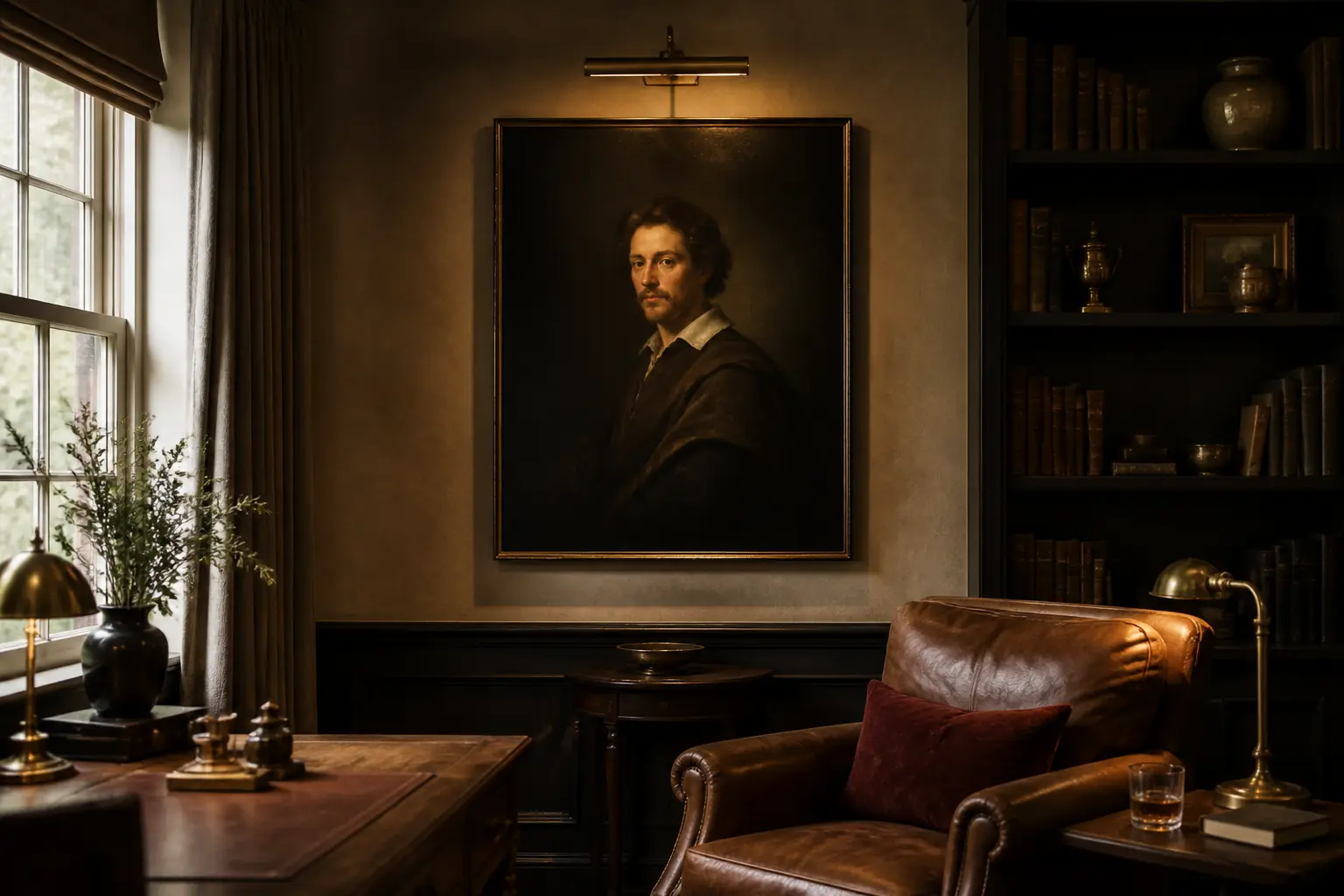
Choosing Authentic Period Framing: Dutch Ripple And Museum Gilt
An Old Master painting is incomplete without an appropriate period frame. In seventeenth-century Holland, art collectors rarely placed their paintings in flashy, ornate French Rococo frames. Instead, they favored distinctive Dutch ebonized ripple frames made from blackened wood with subtle architectural ripples, stepped profiles, and delicate inner gold slip liners.
For studies, libraries, and contemporary dark-paneled interiors, an ebonized Dutch cassette frame or a dark walnut moulding offers historical authenticity and understated elegance. The dark frame edge merges naturally with the painted shadows, allowing the illuminated face to shine forward with hypnotic brilliance. For more traditional and opulent European settings, a hand-finished antique gold leaf frame with classical acanthus leaf corners adds majesty and gravitas.
Avoid ultra-modern thin metal poster frames or frameless modern wraps for Rembrandt reproductions. The substantial visual weight of classical chiaroscuro demands a deep, sculpted moulding that establishes a clear threshold between the contemporary room and the historic world inside the canvas.
Verifying Studio Glaze Quality And Production Standards
Due to the complex multi-layer glazing process required for Old Master paintings, hand-painting a Rembrandt reproduction takes significantly longer than modern alla prima styles. Each transparent glaze layer must cure adequately before subsequent glazes are brushed over it. Rushing this sequence results in muddy colors, cracking, or surface cloudiness.
Reputable reproduction studios follow disciplined quality control protocols. Before shipping, clients should receive high-resolution, unedited studio photographs and video clips taken under directional gallery lighting. Examine close-ups of the facial features, the crisp rendering of gold chains, and the smooth transitions along dark collars to ensure that the piece achieves collector-grade fidelity.
To deepen your understanding of oil painting inspection, explore our hand-painted oil painting verification guide, examine standards in our museum quality reproduction standards, or review spatial hanging guidelines in our living room oil painting scale guide. You can also explore works across multiple eras in our Master Artists collection.
Customizing Old Master Reproductions For Custom Spaces
Certain interior architectural projects—such as historic home restorations, private legal chambers, clubhouses, and bespoke wine cellars—require non-standard canvas dimensions or subtle tonal adaptations. Whether you need an oversized focal statement to anchor a double-height fireplace or a pair of complementary companion portraits for a formal dining alcove, custom oil painting commissions fulfill distinct spatial requirements.
When requesting a custom commission, provide room dimensions, wall finishes, and lighting layouts. Skilled master artists in Dafen Oil Painting Village can calibrate glaze warmth to complement existing woodwork, create tailored oval formats, or render custom portrait interpretations executed in the signature Rembrandt lighting style.
Direct collaboration with specialized oil painters ensures rigorous adherence to seventeenth-century European painting traditions, premium linen canvas support, and hand-applied varnish protection without excessive art gallery markup.
Rembrandt reproduction FAQ.
Direct answers for collectors evaluating chiaroscuro contrast, oil glazing depth, framing, and room lighting before ordering.
In a genuine hand-painted oil reproduction, chiaroscuro relies on layered semi-transparent dark glazes that let ambient room light penetrate and reflect from underlying paint coats. Digital prints merely deposit flat black or brown pigment dots on the surface, creating muddy, opaque shadows that lack optical depth.
Yes. Custom dimensions can be commissioned through specialized studio artists while strictly respecting the artwork natural aspect ratio. Professional painters adapt proportions to fit fireplace mantels, libraries, or executive desks without distorting the focal portrait lighting.
Classical Dutch ebonized ripple frames, deep antique scoop mouldings, or ornate gold-leaf museum frames complement Rembrandt paintings best. The dark timber and subdued metallic trim harmonize with warm amber highlights without overpowering intimate facial expressions.
No. They are newly painted studio interpretations hand-crafted by experienced artists after historic public domain masterworks. They are not the historical seventeenth-century originals and do not claim museum certification or institutional endorsement.
Display the painting under warm directional accent lighting (2700K to 3000K) positioned at approximately 30 degrees to minimize glare on glossy glaze layers. Avoid cool fluorescent lighting or direct unfiltered window exposure that can wash out subtle transitions between shadow and light.