Dafen Oil Painting Village history is the story of a Shenzhen/Longgang art district becoming associated with oil-painting workshops, galleries, reproduction painting, custom work, and art commerce. Dafen is widely known for oil painting reproductions, but the useful lesson is not that a village learned to copy famous images. The stronger lesson is how a dense group of painters, frame makers, gallery sellers, packers, and project coordinators turned oil painting into an accessible physical object for buyers around the world.
For DafenArts buyers, that history matters because a hand-painted oil painting is not a flat file. It is a canvas surface built by a person: layered color, visible brushwork, edge control, drying, review, and packing. Understanding Dafen helps buyers ask better questions before choosing a master artist reproduction, a custom oil painting from a photo, or a coordinated group of paintings for a room or project.
The boundary is just as important as the history. Dafen place context does not prove that a specific painting is original, official, licensed, museum-certified, rights-cleared, or high quality. Those claims need product-level proof, direct documentation, and careful wording.
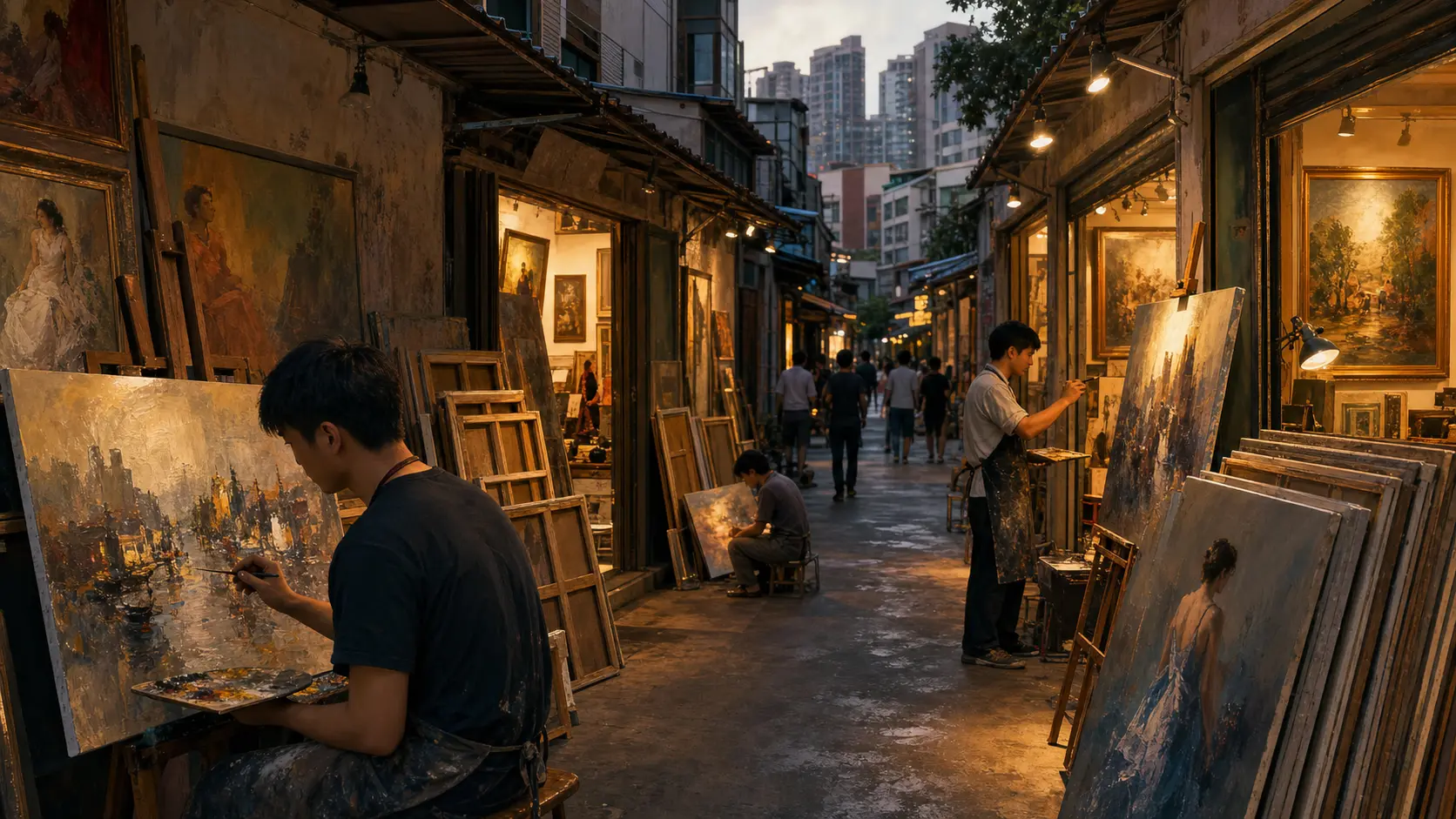
Dafen Oil Painting Village History In One Minute
Dafen is a community in Buji, Longgang District, Shenzhen. Public references commonly trace the modern oil painting industry there to 1989, when Huang Jiang, a painter and entrepreneur associated with Hong Kong art-trade demand, began organizing oil painting reproduction work in the area. The early model was practical: trained painters, lower workshop costs than central Hong Kong, proximity to southern China export routes, and a market that wanted hand-painted versions of famous Western images.
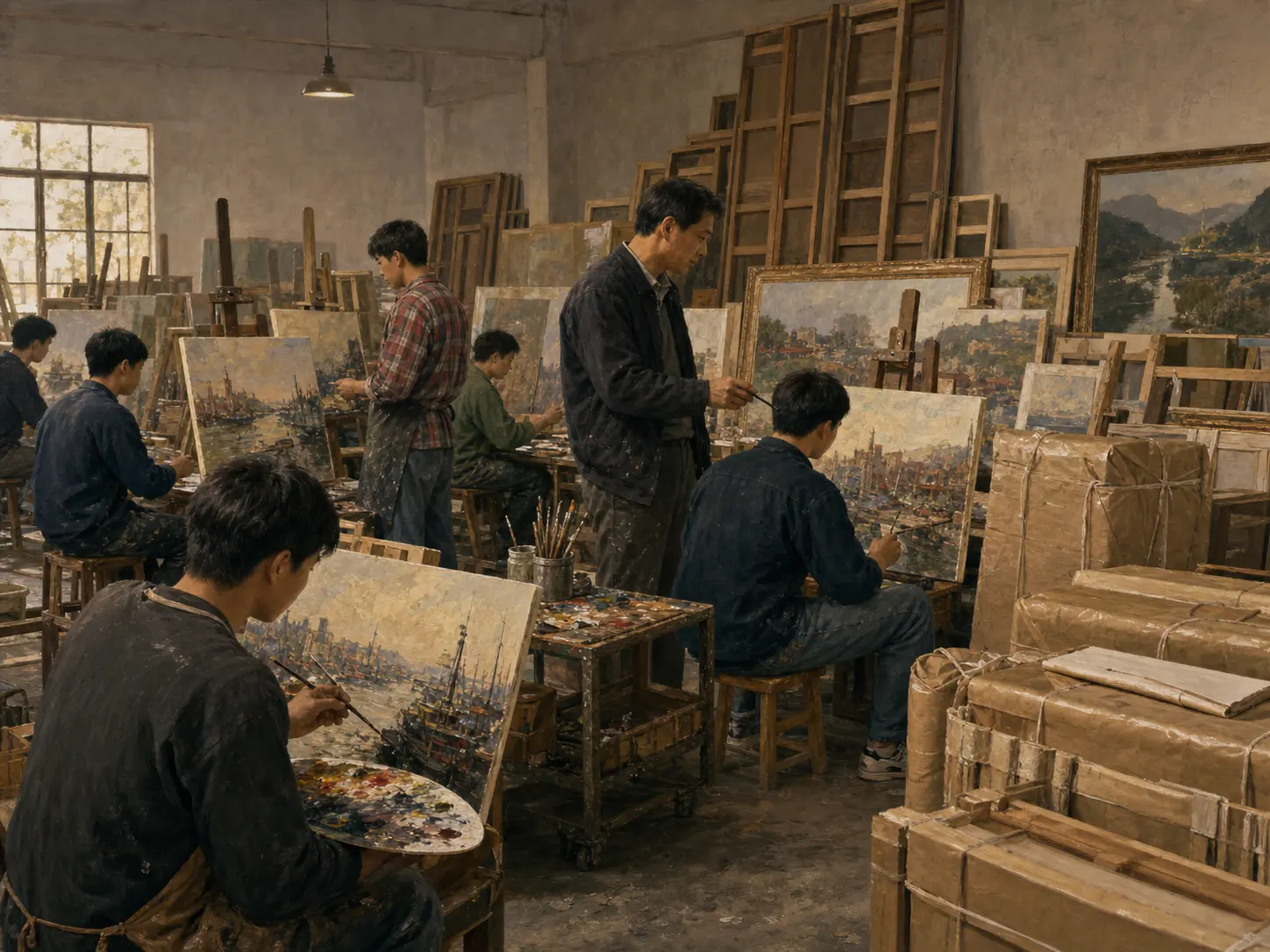
By the 1990s and early 2000s, Dafen had become a recognizable art-production cluster. It was not only a place where one painter worked alone. It became an ecosystem: some painters focused on underpainting, some on brushwork, some on finishing, while shops handled framing, sales, packing, and overseas orders. Later, after export demand changed and domestic interest grew, Dafen also became a visitor destination, gallery street, training ground, and symbol of Shenzhen’s culture-industry experiment.
Timeline: From Village Workshop To Global Art Hub
| Period | What Changed | Why It Matters |
|---|---|---|
| Before 1989 | Dafen was a local village community within the Shenzhen area, before the oil painting trade became its public identity. | The art identity came from economic specialization, not from an old museum district. |
| 1989 | Huang Jiang is widely credited with starting Dafen’s modern oil painting reproduction industry. | This date anchors the modern Dafen oil painting story. |
| Early 1990s | A group of trained painters gathered around workshop production and repeat orders. | Dafen became a skill cluster, not just a single studio. |
| 2000s | Export demand, cultural-industry attention, galleries, and infrastructure pushed Dafen into wider public view. | The village became part of Shenzhen’s cultural economy. |
| After 2008 | Western export demand weakened, and many studios had to adjust toward domestic buyers, tourism, original work, and custom directions. | The strongest studios needed more than speed; they needed quality control and buyer trust. |
| Today | Dafen is known as an oil painting village, gallery street, studio network, and art-shopping destination. | Buyers should judge individual sellers by proof, not by location alone. |

Asparagus by Edouard Manet - Hand-Painted Oil Reproduction
Asparagus painting (Master Studio)Est. Value Price range: $393.00 through $1,500.00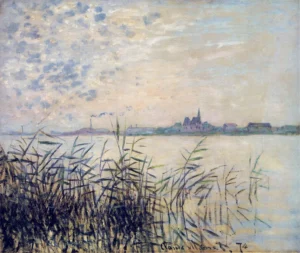
The Seine near Argenteuil - Serene Waters - Textured Oil
Argenteuil river landscape reproduction (Master Studio)Est. Value Price range: $393.00 through $725.00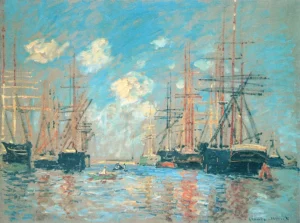
The Sea, Port in Amsterdam - Maritime Scene - Textured Canvas
claude monet (Master Studio)Est. Value Price range: $393.00 through $725.00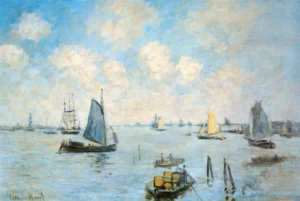
The Sea at Amsterdam - Nautical - Textured Oil
claude monet (Master Studio)Est. Value Price range: $362.00 through $695.00
1989: Why The Workshop Model Took Root
Dafen’s modern oil painting identity did not appear by accident. Shenzhen was growing fast, Hong Kong and overseas demand were nearby, and international buyers wanted affordable painted works in quantity. A hand-painted reproduction could carry the visual language of a famous image while still being a physical object made with brush, paint, and canvas.
The early Dafen model made that possible at scale. Instead of every painting being treated as a one-off gallery commission, workshops organized repeated subjects, shared techniques, and divided labor. That model made Dafen famous, but it also created a problem: speed and volume could hide the difference between a careful painting and a rushed surface. For modern buyers, the question is not only whether a work came from Dafen. The question is whether the specific seller can show the painting surface, process, and final review.
The Skill Cluster Behind The Reputation
The best way to understand Dafen is as a cluster of related skills. A finished oil painting needs drawing, color blocking, brushwork, texture, drying, finishing, frame decisions, packing, and communication with the buyer. Around a dense art district, these jobs can exist close to one another. That proximity is one reason Dafen became useful to overseas buyers looking for oil painting reproductions and custom work.
The cluster also explains why Dafen cannot be judged with one lazy label. Some output has been fast and commercial. Some painters have treated reproduction work as disciplined craft. Some studios focus on decorative volume. Others focus on better surface, color, size control, and client confirmation. A serious buyer should look past the word “Dafen” and ask for physical evidence.
From Export Reproductions To A Broader Art District
Dafen became internationally visible because of reproduction oil paintings. Those works often referenced famous artists and familiar museum images. The demand was simple: people wanted paintings that could fill homes, hotels, offices, and galleries with recognizable art at accessible cost.
After the 2008 financial crisis, public reporting described weaker Western demand and a need for Dafen studios to adapt. That shift matters. It pushed the district beyond one story about mass reproduction. More buyers began caring about local tourism, domestic collecting, custom subjects, Chinese painting themes, original work, and the credibility of the painting process itself.
What Dafen History Means For A Buyer
Dafen’s history should make a buyer more careful, not less. A location with many painters can offer strong capability, but it can also contain uneven quality. The safest buying approach is to ask for evidence that matches the claim. If a seller calls a work hand-painted, there should be close-up texture images, visible brush direction, clear canvas surface, and realistic product or process photos. The hand-painted oil painting inspection guide is the practical next read for that proof check. If a painting is custom, there should be a way to discuss the reference, size, color direction, final wall use, and shipping expectations before production moves too far.
For buyers who want the commercial Dafen angle rather than the history timeline, the companion guide on Dafen Oil Painting Village hand-painted reproductions explains how to read Dafen background together with product proof, custom painting paths, and wholesale sourcing questions.
This is especially important for large paintings, master artist reproductions, portraits from photos, and hospitality projects. A flat print may work for some decorative uses. A hand-painted oil painting should justify itself through material presence: paint body, surface rhythm, light response, and a final object that can hold a wall.
Where The Dafen Context Helps Buyers
The village name is useful only when it is paired with specific buying evidence: hand-painted oil paintings, clear buyer communication, visible material proof, and next steps that match the buyer’s need. A shopper can start with the Master Artists collection when looking for a hand-painted reproduction, or use the custom oil painting service when the subject, size, or room direction needs to be discussed first.
For the broader studio context, the About DafenArts page connects the Dafen background with the site’s hand-painted oil painting, custom commission, and trade sourcing paths.
For trade buyers, Dafen history is also relevant. Hotels, interior designers, villas, and project buyers often need consistency across multiple works, not only one attractive image. The wholesale and designer sourcing path should be used when a project requires coordinated sizing, repeated style direction, packing expectations, and a clearer studio handoff.
How To Read Dafen History References
Public Dafen references are useful for understanding the district’s location, history, workshop culture, and art-market transformation. They should not be treated as proof that a specific DafenArts painting is endorsed, rights-cleared, museum-certified, or guaranteed to meet a particular production capacity. Buyers still need product-level proof, clear order wording, and direct communication before relying on any specific claim.
Frequently Asked Questions
Frequently asked questions.
Direct answers for buyers comparing hand-painted oil painting options, custom details, and the next step before ordering.
Modern references commonly trace Dafen’s oil painting industry to 1989, when Huang Jiang began organizing oil painting reproduction work in the area. The village’s public art identity grew through the 1990s and 2000s as more painters, workshops, and galleries gathered there.
No. Dafen became famous through oil painting reproductions, but the district has also developed galleries, custom painting services, original work, tourism, and project-based art sourcing. Buyers should judge the specific studio and proof, not only the district name.
Dafen matters because it concentrated many oil painting skills in one area: drawing, brushwork, texture, finishing, framing, packing, and sales. That cluster can support hand-painted reproductions and custom work when the seller provides clear material proof.
Ask for close-up surface images, realistic size guidance, reference review, photo confirmation, and shipping or packing information. For custom work, discuss subject, size, color direction, and room placement before the painting begins.
No. Dafen history is place and craft context. It does not prove that DafenArts or any specific painting is official, licensed, authorized, museum-certified, rights-cleared, or the historical original artwork. Those claims require direct documentation.