If you are shopping for famous painting reproductions on canvas, start with the decision that changes the wall, not with the longest list of famous names. Choose the artwork family first, then check the source reference, canvas size, crop, frame direction, and hand-painted surface proof.
Short answer: a strong famous painting reproduction fits the room, reads clearly at the viewing distance, and still behaves like a painted object. Look for visible brushwork, edge handling, canvas texture, and a clear route into an artist or product category before treating the piece as ready to order.
The wording matters too. A reproduction is not the historical original. It should not be called official, licensed, authorized, museum-certified, or rights-cleared unless direct documentation supports that exact claim. Buyers can still choose confidently by separating the physical painting decision from rights, museum, or authorship claims.
For DafenArts buyers, the practical route is to use this guide as a filter, then move into the Master Artists hub, the Master Artists product category, or the custom oil painting path when the size, crop, or source image needs review.
Choose The Artwork Family Before The Famous Name
Many buyers search for famous paintings because they want something established. That still leaves very different wall outcomes. An old master portrait, a Monet-style garden subject, a Van Gogh-inspired landscape, and a classical still life can all be famous painting directions, but they do not solve the same room problem.
Start by naming the mood you want. Darker old-master subjects usually need stronger framing, warmer lighting, and enough wall space to carry visual weight. Impressionist landscapes can soften a room and add movement. Floral and still-life paintings often work in dining rooms, bedrooms, and entry spaces because they give color and structure without requiring a narrative scene. Seascapes and landscapes can open a narrow wall when the horizon and light direction feel natural.
This first step also prevents a common buying mistake: choosing an artwork only because it is famous, then discovering that the color, crop, or frame weight does not suit the room. A famous painting reproduction should support the room first and the name second.
Decide Between Exact Reference And Inspired Direction
Some buyers want a specific named artwork. In that case, confirm the reference image, title or version, crop, size, and visible details before ordering. Exact-work requests are safest when the artwork facts have already been checked and the reproduction language stays conservative.
Other buyers want the feeling of an artist, period, or subject without needing a strict copy. That route can be easier for residential decor, hotel projects, and custom sizes because the painting can prioritize room color, composition, and scale. A Monet-related direction might focus on light and garden atmosphere. A Van Gogh-related direction might focus on movement and surface. A Cezanne-related direction might work through still life or landscape structure. Those are buying directions, not claims that the historical artist made the product.
If the source image is unclear, low resolution, heavily cropped, or taken from a third-party listing, treat it as a reference conversation rather than a final production command. Good reproduction buying depends on what the painter can actually see and what the buyer expects the finished canvas to preserve.
Check Whether The Surface Still Feels Hand Painted
A famous painting reproduction on canvas should not depend only on the source image. Buyers should look for surface variation, visible paint build, edge handling, and enough material truth to separate the piece from a smooth print product. The goal is not fake heaviness. The goal is believable painterly character that fits the artwork family.
For impressionist subjects, the surface may need broken color and light rhythm. For portraits or old-master-style work, cleaner transitions and controlled drawing can matter more than thick texture. For floral or landscape subjects, color balance, edge clarity, and distance readability often decide whether the piece feels composed on the wall.
| Artwork family | What to inspect | Room-use note |
|---|---|---|
| Old masters | Tonal control, drawing discipline, restrained surface | Works best where framing and wall mood feel intentional |
| Impressionist works | Broken brushwork, light rhythm, atmosphere | Useful when the room needs softness and movement |
| Floral or still life subjects | Color balance, background calm, edge clarity | Easier to place on smaller residential walls |
| Landscapes and seascapes | Depth, horizon logic, light direction | Good for creating visual space and calm |
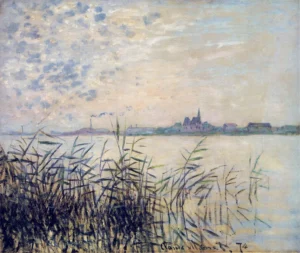
The Seine near Argenteuil – Serene Waters – Textured Oil
Argenteuil river landscape reproduction (Master Studio)Est. Value Price range: $200.00 through $400.00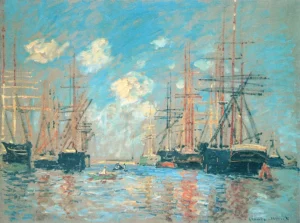
The Sea, Port in Amsterdam – Maritime Scene – Textured Canvas
claude monet (Master Studio)Est. Value Price range: $200.00 through $400.00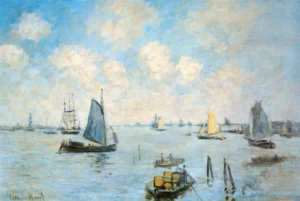
The Sea at Amsterdam – Nautical – Textured Oil
claude monet (Master Studio)Est. Value Price range: $200.00 through $400.00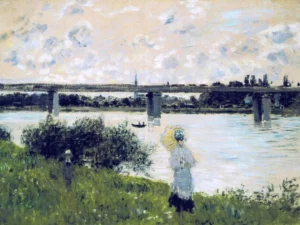
The Promenade near the Bridge of Argenteuil – Serene – Hand-Painted Oil
claude monet (Master Studio)Est. Value Price range: $200.00 through $400.00
Match Size, Crop, And Frame To The Wall
Scale changes the reading of a famous painting reproduction. A detailed subject that works at medium size can feel crowded if it is enlarged without enough viewing distance. A simple landscape can handle a wider canvas, but only when the horizon, sky, and foreground still feel balanced after the crop.
Before choosing a size, measure the wall width, furniture width, and viewing distance. Above a sofa, console, or bed, the painting should feel intentional rather than squeezed into a leftover gap. In a hallway or stair landing, the piece may need a calmer crop because viewers see it from the side or at close range.
Frame choice should follow the subject. Classical subjects can carry heavier frames. Lighter impressionist, floral, or seascape works often benefit from quieter framing so the surface and color stay visible. If the buyer wants a custom size, the best question is not only “Can it be any size?” but “Which crop keeps the composition convincing at this size?”
Keep Physical Quality Separate From Rights Claims
Many famous artworks are old, widely reproduced, or held in museum collections, but those facts do not automatically prove product authorization, museum endorsement, or image-use permission. Museum pages and artwork references can help with factual context after source review. They do not, by themselves, prove that a product is official, licensed, endorsed, or rights-cleared.
For buyer-facing product language, safer terms are hand-painted reproduction, oil painting reproduction, painting after a known work, or painting inspired by an artist or artwork family when that is accurate. Avoid language that makes the canvas sound like the historical original or an institutionally approved product unless there is direct proof.
This separation protects the buyer too. Physical quality answers one set of questions: Is it painted on canvas? Does the surface show variation? Does the crop fit the room? Rights and status answer a different set of questions: Who owns the underlying image rights? Is a specific use permitted? Has anyone granted authorization? Do not mix those two decisions into one vague promise.
Use Artist Pages As A Buying Map
After the main decision is clear, use artist and category pages to narrow the path. The Van Gogh artist page can help buyers compare energetic color and texture-led subjects. The Monet artist page is a better route for garden, water, and impressionist atmosphere. The Manet artist page can support portrait, figure, still-life, and modern-painting interest. The Cezanne artist page is useful for buyers comparing still life, landscape, and structured color.
Those pages are browsing routes, not proof that a product is an original artwork by the historical artist. For exact named artworks, check the artwork-specific product or reference page before using title, date, collection, or public-status language in a custom brief.
Buyers who want proof of hand-painted character can also read why Dafen still matters for hand-painted reproductions. Buyers comparing quality wording can use the reproduction quality proof guide for safer surface-inspection language.
When A Custom Request Makes More Sense
A category page is useful when the buyer is still choosing an artist, mood, or subject. A custom request makes more sense when the buyer already has a wall size, source image, specific crop, frame direction, or room palette in mind.
Custom review is especially useful for famous painting reproductions because small changes can alter the whole result. Cropping a figure, changing the aspect ratio, enlarging a landscape, or simplifying a background should be discussed before production begins. If the buyer wants a gift, hotel corridor, dining room, lobby, or oversized residential wall, the size and viewing distance may matter as much as the artwork name.
The strongest order brief usually includes the target size, wall photo if available, frame preference, source reference, must-keep details, acceptable crop range, and any color priorities. That gives the painting team a clearer direction without promising exactness that the source material cannot support.
Famous painting reproduction FAQ.
Direct answers for buyers comparing artwork families, painted surface proof, frame fit, and safe reproduction wording before ordering.
Start with the room mood and viewing distance. Old masters usually need a more formal setting, impressionist works can soften a room, and landscapes or florals are often easier to place in everyday residential spaces.
Look for visible brushwork, varied paint surface, edge handling, canvas presence, and product or process images that show the work behaves like a painted object rather than a uniformly smooth print.
Only use those terms when direct documentation supports the specific claim. Safer wording is hand-painted reproduction, oil painting reproduction, or painting inspired by a known artwork family.
Use a custom request when you need a specific size, crop, frame direction, source-image review, or room fit. Browsing the Master Artists category is better when you are still choosing an artist, artwork family, or surface style.
No. A museum page can help identify an artwork after review, but it does not automatically grant product authorization, image-use permission, or endorsement. Treat rights and physical painting quality as separate checks.
Move From Famous Name To Order-Ready Brief
The strongest famous painting reproduction purchase is usually a narrower purchase. Choose the artwork family, check the surface behavior, decide exact versus inspired direction, and confirm size, crop, and frame logic. Then use a verified artist, category, or custom path so the next step is specific enough for a real painting decision.