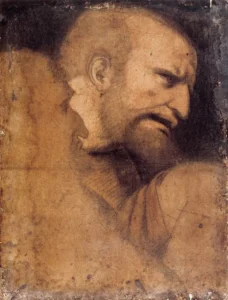
High Renaissance

Leonardo da Vinci oil painting reproductions.

Hand-painted Leonardo da Vinci oil painting reproductions for buyers seeking Renaissance balance, soft transitions, and iconic portrait presence. Browse hand-painted oil works with visible brushwork, prepared canvas, clear product details, and secure checkout.

Artist
Leonardo da Vinci
Era
1452-1519
Works
Mona Lisa, The Last Supper, Lady with an Ermine, Virgin of the Rocks
Leonardo da Vinci hand-painted oil painting reproduction collection

Artist and technique notes

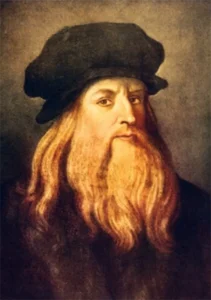
Leonardo da Vinci was an Italian polymath of the High Renaissance who was active as a painter, draughtsman, engineer, scientist, theorist, sculptor, and architect. While his fame initially rested on his achievements as a painter, he also became celebrated for his notebooks, in which he made drawings and notes on a variety of subjects, including anatomy, astronomy, botany, and cartography. He is widely considered one of the greatest painters in the history of art and is best known for masterpieces like the Mona Lisa and The Last Supper.

To own a Leonardo is to possess the ultimate symbol of human genius and psychological depth. His work is characterized by "Sfumato"—a technique of blending colors and tones so subtly that they melt into one another like smoke. At DafenArts, we recreate his divine vision using multi-layered glazing and ultra-fine brushwork, ensuring that each hand-painted reproduction captures the enigmatic soul and timeless elegance of the universal man.

“Painting is poetry that is seen rather than felt, and poetry is painting that is felt rather than seen.” — Leonardo da Vinci

Leonardo da Vinci: The Ultimate Master of the High Renaissance

Leonardo da Vinci (1452–1519) was a visionary who sought to decode the underlying laws of nature through the medium of art. While his contemporaries often focused on rigid outlines and symbolic storytelling, Leonardo obsessed over the "science of seeing." He pioneered the study of optics, anatomy, and atmospheric perspective, believing that a painter must understand the physical structure of a muscle or the behavior of light hitting a curved surface before they could truly depict life. For Leonardo, the eye was the primary window to the soul, and art was the highest form of knowledge.

This relentless pursuit of "Saper Vedere" (knowing how to see) allowed him to create works with a staggering level of realism and emotional complexity that remain unrivaled even five centuries later. His ability to render the human spirit—capturing what he called the "motions of the mind" (moti dell'animo)—set him apart from the more sculptural and muscular approach of his rival Michelangelo. While others painted figures as statues, Leonardo painted them as breathing, thinking entities. At DafenArts, we honor this legacy by focusing on the "softness" of the Renaissance gaze. Our master artists spend months on a single canvas, ensuring the transitions between light and shadow are as seamless and mysterious as a Leonardo original, making his work an ideal "Statement Piece" for luxury environments that value intellectual depth and historical gravitas.

Early Life and the Verrocchio Workshop: The Birth of a Genius

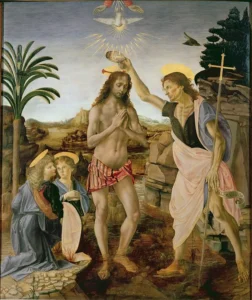
Leonardo was born in the small Tuscan town of Vinci, the illegitimate son of a notary and a peasant woman. His journey began in Florence, the vibrant epicenter of the Italian Renaissance, where he was apprenticed to the master artist Andrea del Verrocchio. It was in this hyper-creative collaborative environment that Leonardo’s genius first manifested; legend has it that his contribution to Verrocchio’s The Baptism of Christ was so superior that his master vowed never to paint again. He didn't just paint an angel; he painted a divine presence with flowing hair and a luminous gaze that outshone everything else on the canvas.

This period of early experimentation was shared with other rising stars, laying the foundation for the High Renaissance. Despite his immense talent, Leonardo was often a slow and meticulous worker, frequently leaving projects unfinished as his mind wandered to new scientific inquiries—from flying machines to water systems. Unlike the prolific output of later masters like Rembrandt, Leonardo’s surviving oil paintings are incredibly few, which only adds to their immense aura and value. His lifelong struggle to balance the precision of science with the poetry of art created a tension that defines his style—a style that would later influence the quiet, meditative light of Johannes Vermeer and the rigorous structural philosophy of Paul Cézanne.

The Revolutionary Sfumato and Glazing Techniques

Leonardo’s greatest technical contribution to Western art was the development of "Sfumato." He famously stated that a painting should not have hard lines or borders, as they do not exist in nature. To achieve this "smoky" effect, he applied dozens—sometimes hundreds—of microscopic layers of transparent oil glazes. Each layer would be so thin that it was nearly invisible, requiring extraordinary patience and a steady hand. This technique allowed him to create a sense of three-dimensional volume and atmospheric depth that made the subjects appear to emerge from the darkness into the light.

At DafenArts, our master painters spend years mastering this precise Renaissance choreography. We understand that a Leonardo da Vinci reproduction is not just a copy of a face; it is a meticulous construction of light and air. Using high-pigment professional oils on fine-grain linen, we recreate the "inner glow" that characterizes his portraits. When you look at our reproduction of the Mona Lisa, you don't just see a smile; you see the subtle muscle movements beneath the skin and the hazy, dreamlike landscape of the background, all captured with 100% hand-painted precision. Our artists utilize the same glazing methods to ensure the "enigmatic quality" of the original is preserved.

Masterpieces of Mystery: Beyond the Mona Lisa

Leonardo’s portfolio, though small in number, contains some of the most analyzed and sought-after works in human history. Each piece is a masterclass in psychological tension and mathematical harmony:

Mona Lisa (La Gioconda): The world’s most famous portrait, celebrated for its ambiguous expression and the revolutionary use of Sfumato. It represents the pinnacle of his psychological observation and his mastery of atmospheric perspective.
The Last Supper: A monumental work of dramatic narrative and mathematical perspective, portraying the exact moment of betrayal with a cinematic intensity that rivals the group dynamics of Rembrandt. The architectural lines and the gestures of the apostles all point toward the central figure of Christ.
Salvator Mundi: The "Savior of the World," a work that showcases his mastery of crystalline light and the divine human form, similar to the grace and idealized beauty found in the works of Raphael.
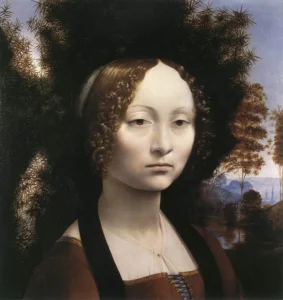
Lady with an Ermine: An exquisite example of his ability to paint texture—from the soft fur of the animal to the luminescent, porcelain-like skin of Cecilia Gallerani.

These works are the ultimate choice for a "Living Room Wall Art" centerpiece or a sophisticated "Office Decor" statement. Our Leonardo series is hand-painted with a focus on his unique "Leonardo Blue" and earthy, warm tones that create a sense of eternal balance. His influence is the bridge between the classical past and the modern emotionality of masters like Edouard Manet.

Evolution of Style: From Observation to Divinity
Period Subject Focus Artistic Goal Technical Approach
Early Florence Portraiture & Nature To master anatomical detail Precise lines & vibrant colors
First Milanese The Last Supper To capture dramatic narrative Innovative (though fragile) fresco & Sfumato
Mature Career Mona Lisa To achieve total psychological depth Dozens of transparent glazes & Smokey edges
Late Career St. John the Baptist To explore light as a divine tool Deep Chiaroscuro & soft, ethereal forms
Notes from the Atelier: Recreating the Renaissance Soul

At DafenArts, we recognize that a Leonardo reproduction requires a "Building" process rather than a mere "Drawing" process. Our artists do not start with a simple outline; they build the composition through interlocking layers of light and shadow, exactly as the master did in his studio in Florence or Milan. This ensures that the reproduction has the same "living" quality as the original, where the skin appears semi-translucent under the light.

Unlike flat, lifeless digital prints, our 100% hand-painted canvases possess a physical soul and a three-dimensional depth. The "Sfumato" layers create a subtle depth on the canvas that interacts dynamically with the lighting in your room, making the expression of the subject shift and change as you move around it. This is a living tribute to the Louvre and the National Gallery originals—art that possesses a "divine breath" and a physical presence that commands respect. We use traditional fine-grain linen to ensure the smoothest possible surface for these delicate transitions.

A Legacy Beyond the Mass-Produced Print

In an era of mass-produced, flat canvas prints and digital filters, a hand-painted Leonardo da Vinci reproduction is a rare luxury that celebrates the "universal genius" of art. DafenArts serves as the cultural bridge between the 15th-century Italian workshop and your modern living space. We use only archival-quality materials—fine linen and light-fast, high-density pigments—to ensure that the structural integrity and emotional power of your investment lasts for generations, resisting the fading common in lesser replicas.

Owning a Leonardo is a statement of intellectual excellence and cultural refinement. It is the art of the polymath, the dreamer, and the philosopher. By selecting a DafenArts reproduction, you are honoring the man who proved that art and science are two sides of the same coin, and bringing the very foundation of the High Renaissance into your private collection. This is not just a painting; it is an heirloom of human civilization.

Curator’s Advice for Art Collectors

When selecting a museum-quality Leonardo, focus on the "Shadow Transitions." A true hand-painted reproduction must show how light gradually turns into shadow without a visible line or hard border. It shouldn't look "painted"; it should look like it’s emerging from the air itself. Observed from an angle, the canvas should reveal a sophisticated, smooth texture that mimics the slow, meditative, and almost microscopic pace of Leonardo's own hand.

Consider the placement of your Leonardo; his structured compositions and subtle glazes thrive under soft, balanced, or warm-toned lighting that allows the "Sfumato" to truly pop and the colors to glow. Whether you choose a vibrant lady with an ermine or a monumental landscape, our goal is to provide a hand-painted masterpiece that brings the divine elegance of the "Master of All Masters" into your daily environment. Explore more masters like Johannes Vermeer or Rembrandt to complete your comprehensive gallery of light and shadow.

The reproduction challenge is softness: transitions need layered oil handling without harsh outlines or flat poster edges.

Studies, formal halls, reading rooms, reception spaces, and classical gallery walls.

Brushwork Proof

Leonardo da Vinci in oil paint and canvas.

Close-up impasto brushwork texture on a hand-painted oil painting canvas
Texture

Oil brushwork, not flat color

The reproduction challenge is softness: transitions need layered oil handling without harsh outlines or flat poster edges.

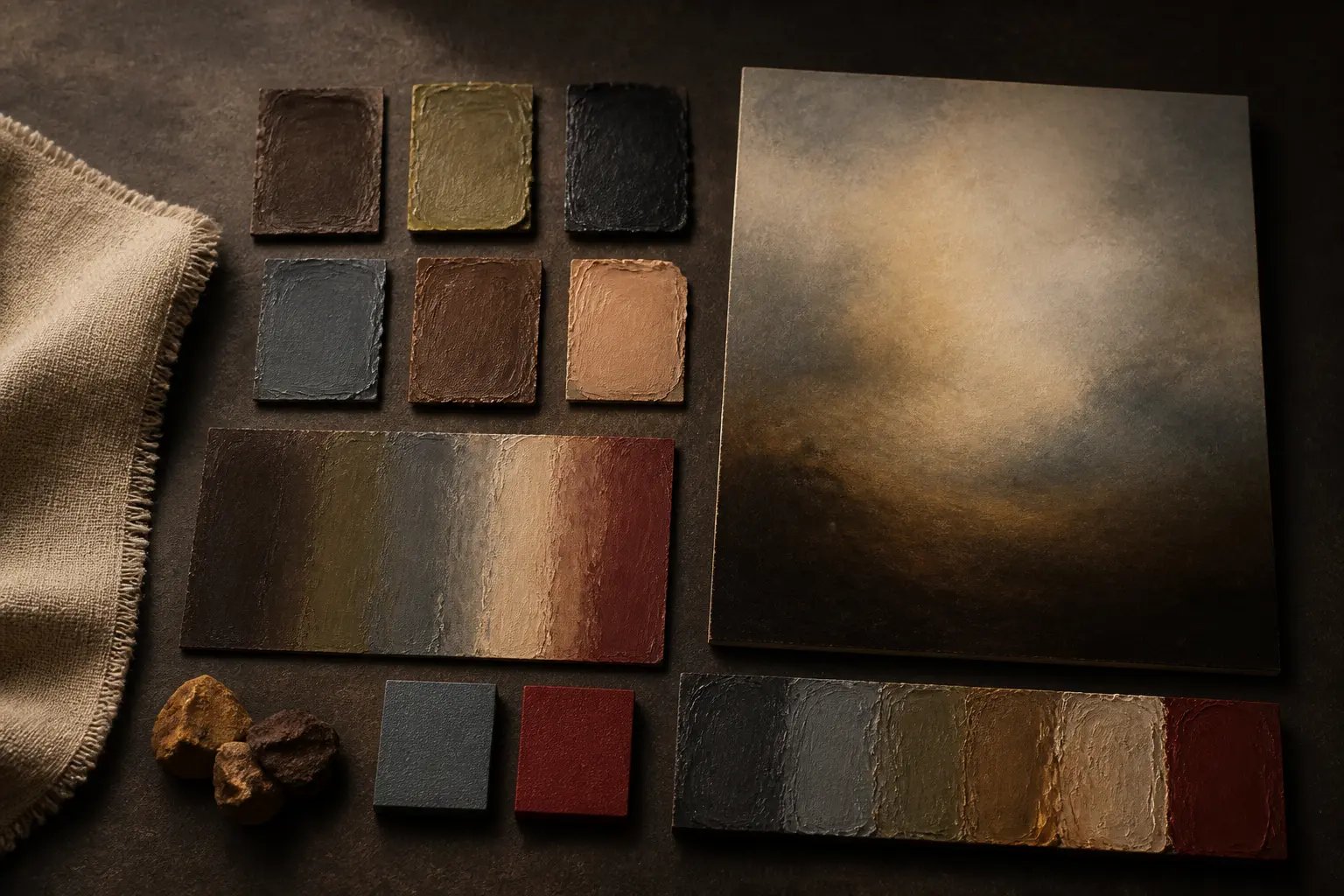
Premium oil pigments and palette for DafenArts hand-painted canvas reproductions
Color

Layered pigment handling

Layered oil color helps the work hold depth from across the room and detail at close viewing distance.

Protected packaging for international hand-painted oil painting delivery
Delivery

Reviewed and protected

Finished canvases are checked, dried, and packed with protection suited to international delivery.

Curator Questions

Questions before ordering Leonardo da Vinci works.

No. DafenArts focuses on hand-painted oil reproductions on canvas, not posters or giclee prints.
No. These are hand-painted oil reproductions after Leonardo, not original historic artworks by the artist.
Compare subject, wall formality, room lighting, portrait scale, and frame tone before choosing a product.