

Experienced Studio Artists
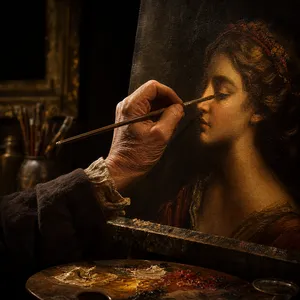
Our studio artists focus on traditional oil painting techniques. Each reproduction is built stroke by stroke with attention to composition, color matching, and surface texture.
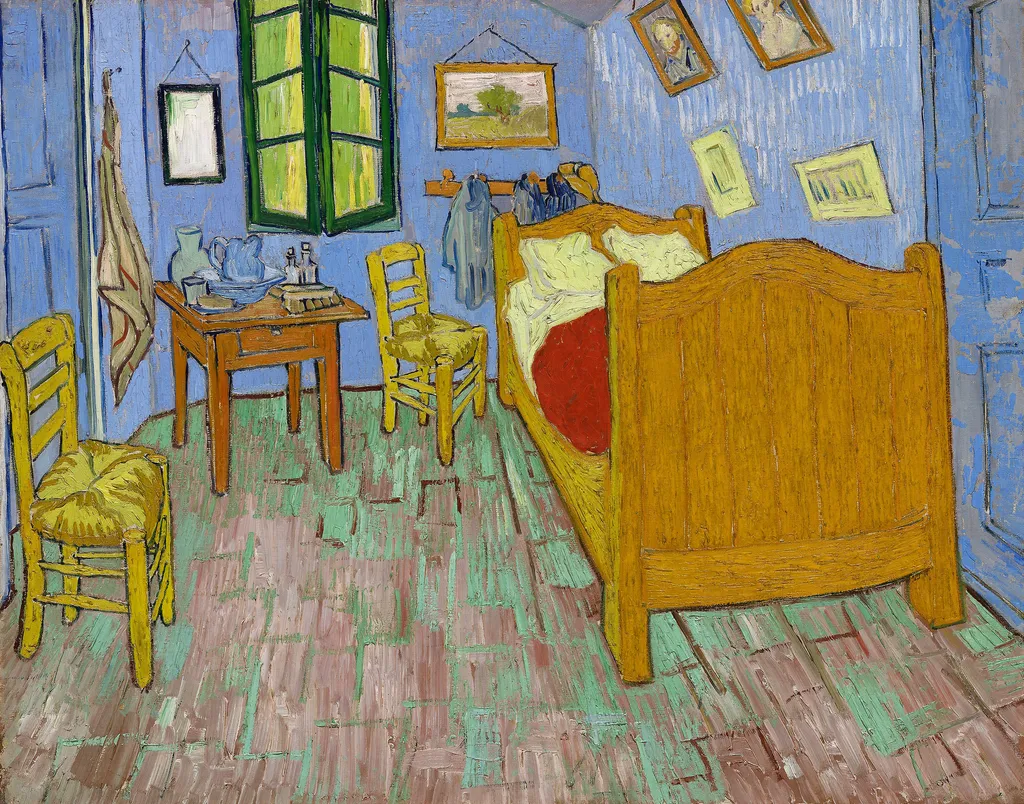
In a world flooded with machine-printed posters, owning something real has become rare. Vincent's Bedroom in Arles is 100% hand-painted from scratch, taking 10–15 days of focused work by experienced artists in the Dafen Oil Painting Village. You'll see tiny ridges of paint and subtle color blending — the beauty you can't fake.
Signed by the artist on the back — a mark of authenticity.
Place Vincent's Bedroom in Arles in your dining room for dinner parties, in your study for daily inspiration, or in a lobby to impress clients. The painting's depth and scale command respect and admiration.
Works with natural and artificial light — the impasto catches every ray.
A canvas print is flat, lifeless, machine-made. This hand-painted oil reproduction of Vincent's Bedroom in Arles from Dafenarts has actual texture, three‑dimensional brushstrokes, and subtle color shifts that change with the light. Run your fingers over the surface (gently!) — you'll feel the impasto ridges.
30-Day Satisfaction Guarantee — love it or return it, no questions asked.
When Vincent van Gogh first set foot in the "Yellow House" in Arles during the late summer of 1888, he was not merely looking for a place to sleep; he was searching for a sanctuary. On October 16, 1888, he wrote a famous letter to his brother Theo, describing a new canvas that captured his personal quarters. Modern scientific analysis by the Van Gogh Museum has revealed a startling truth that adds a layer of poignancy to any hand-painted oil reproduction: the walls we now perceive as pale blue were originally intended to be a vibrant, pale violet. This color was chosen specifically to contrast with the "fresh butter yellow" of the bedstead and chairs. Over a century of light exposure has caused the red pigments in the purple to fade, leaving behind the blue base. When a master artist recreates this work today, they are not just copying colors; they are engaging with the ghost of Vincent’s original intent—a room designed to radiate "absolute repose" and sleep. The strange, trapezoidal angles of the room were not an artistic error or a sign of mental instability; architectural records confirm the house itself was built on a skewed corner, making this work a remarkably faithful, yet emotionally charged, document of the only place Vincent ever truly felt at home.
To view a museum quality wall art piece of this caliber is to see more than a flat image; it is to experience a landscape of physical paint. Van Gogh’s technique during his Arles period was characterized by a thick, rhythmic application of pigment known as impasto. In this hand-painted oil reproduction, each stroke of the "blood-red" blanket and the "lemon green" pillows is applied with a heavy-bodied oil that retains the physical memory of the brush's path. We call this The Sculptural Surface because the ridges of paint are so pronounced they create their own internal shadows. When you hang this large canvas for living room display near a natural light source, you will notice the painting "change" throughout the day. Morning light catches the peaks of the yellow chairs, while the evening glow settles into the deep grooves of the floorboards. This is a tactile experience that no digital process can ever replicate. Our artists use high-pigment, lightfast pigments to ensure that the "fresh butter" tones of the furniture and the "orange" of the washstand remain as vivid for the next generation as they are today. Each layer is allowed to cure naturally, ensuring the structural integrity of these thick, expressive brushstrokes.
Vincent's Bedroom in Arles is a portrait of optimism. At the time of its creation, Van Gogh was feverishly preparing the Yellow House for the arrival of Paul Gauguin. He envisioned a "Studio of the South," a collaborative utopia where artists could live and work together away from the suffocating atmosphere of Paris. He decorated the guest room with his now-famous Sunflower series, but his own bedroom was meant to be the anchor of the home. He deliberately "flattened" the perspective and removed cast shadows to emulate the clarity and tranquility he admired in Japanese woodblock prints. He wanted the viewer to feel a sense of "unshakeable repose." Ironically, shortly after the first version was completed, a flood in the Yellow House damaged several of his canvases, forcing him to paint the two subsequent versions while staying at the asylum in Saint-Rémy. This hand-painted oil reproduction honors that resilience. It represents the height of his creative powers—a moment when he felt he was finally achieving a "grander style" through the simplification of color and form. By owning this piece, you are preserving the narrative of a man who, despite internal turmoil, sought to give the world a vision of peace and domestic stability.
This is 100% hand-painted on premium archival linen — NOT a canvas print, NOT a giclée, NOT a poster.
Deciding where to place a piece as iconic as Vincent's Bedroom requires an understanding of its psychological weight. While it is a natural choice for a primary suite or a guest bedroom to echo the original subject matter, this museum quality wall art also functions beautifully in a sophisticated study or a home office. Its bold, primary-driven color palette—reds, yellows, and blues—complements a wide array of interior styles, from Mediterranean rustic to mid-century modern. If your decor features natural wood elements, such as oak or pine, the "butter yellow" of Van Gogh's furniture will resonate deeply with the grain of your own furnishings. For those with a more contemporary aesthetic, the skewed perspective and "flattened" tints provide a striking counterpoint to clean, minimalist lines. Because this is a large canvas for living room or bedroom installation, it should be treated as a focal point. We recommend hanging it at eye level, perhaps above a low-profile console or a headboard, to allow the viewer to "step into" the room Vincent so carefully curated for himself. It arrives ready to hang, allowing you to immediately introduce a sense of historical gravitas and artistic warmth into your daily environment.
Every reproduction we produce undergoes a rigorous quality control process to ensure it meets the standards of the world’s most discerning collectors. We do not take shortcuts; we believe that to honor Van Gogh, one must use the same traditional methods that have sustained oil painting for centuries.
In an age of mass-produced digital decor, there is a profound power in owning an object that bears the physical touch of another human being. A hand-painted oil reproduction of Vincent's Bedroom in Arles is more than a decoration; it is a conversation across time. When you look closely at the portraits on the wall within the painting—miniatures of his friends Eugène Boch and Paul-Eugène Milliet—you can see the delicate precision required to paint a "painting within a painting." Our artists spend hours obsessing over these micro-details because they understand that the soul of the work lives in the small nuances. The "broken red" of the floor tiles and the "lilac" of the doors are not applied as flat blocks of color, but as a mosaic of vibrating tones that create energy and life. This museum quality wall art serves as a daily reminder of the importance of "home" and the enduring legacy of an artist who turned a simple room into a universal symbol of the human spirit’s search for rest.
Transform your space with real artistic depth and textured brushwork.
This is a 100% hand-painted oil reproduction of Vincent's Bedroom in Arles by Vincent Van Gogh.
Hand-painted in 10–15 days ? Final photo approval before shipping ?? ? Express delivery in 5–7 days
Scale reference: the figure is 180cm tall with an estimated 46cm shoulder width.
Selected size: 20in x 24in (50cm x 60cm)
SKU: LUX-VVG-VINCENTS-BED-063-20X24
Preview the selected painting inside different interiors. Drag the artwork, adjust the scale, or upload your own room photo before commissioning.
We do not sell flat prints. Every canvas is painted by hand with visible brushwork,
studio review, and material care from the heart of Dafen.
Our studio artists focus on traditional oil painting techniques. Each reproduction is built stroke by stroke with attention to composition, color matching, and surface texture.

We use artist-grade oil paint and durable canvas selected for strong color, texture, and long-term display in normal indoor conditions.
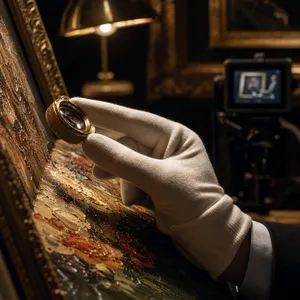
No canvas leaves our studio unchecked. Before dispatch, we review color, composition, brush texture, and packaging readiness, then provide real finished artwork photos for approval when requested.
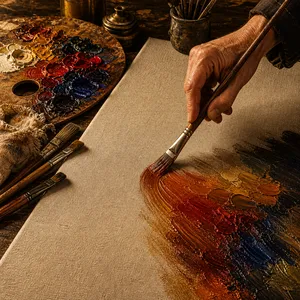
In an era of hybrid giclee prints, we remain a slow-art island. Every piece begins on blank organic linen, painted entirely by hand. We reject digital shortcuts to guarantee true archival longevity.
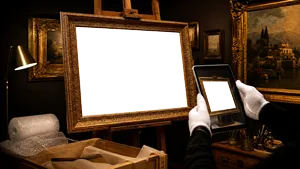
From a single product image, this section previews how the same handmade painting can look in the studio, rolled for local framing, prepared with frame options, or protected for courier delivery. The artwork shown here is the current product image, ready to be replaced by WooCommerce data later.
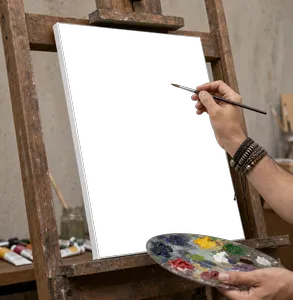
Every DafenArts reproduction is painted stroke by stroke by an experienced studio artist. It is not a print or machine-assisted overlay. The finished piece has layered oil pigment, visible brushwork, and the character of a handmade artwork.

For collectors preferring to collaborate with their local framers, we ship the canvas gently rolled inside a reinforced archival tube. We provide generous blank canvas margins to ensure impeccable stretching without compromising the painted area.
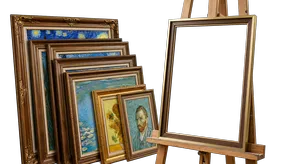
Choose to have your artwork professionally stretched on wooden stretcher bars, finished as a seamless gallery wrap, or paired with a classic frame. These options turn the canvas into a finished, ready-to-display artwork.

Every order is packed for international transit and dispatched via trusted global couriers. Your artwork is protected with packaging matched to the selected finish and supported by shipment tracking from our studio to your address.



Unframed paintings are covered with an archival film, gently rolled, and placed inside a heavy-duty canvas tube.
Stretched and framed paintings are secured with custom foam board constraints and reinforced corrugated boxes.
Clear details about hand painting, approval, delivery, framing, and long-term care before commissioning this artwork.
Each reproduction is painted by hand on canvas by a studio artist. It is not a poster, giclee print, canvas transfer, or printed image with added texture.
Yes. After the painting is completed, studio photos can be sent for approval before dispatch. If a clear order detail needs adjustment, we handle that before shipping.
Yes. Rolled canvas is best for local framing, while stretched canvas, gallery wrap, and framed options are prepared for customers who want a ready-to-hang finish.
Rolled canvases are protected with archival film and shipped in a reinforced tube. Stretched or framed paintings are secured with corner protection, foam board, and a reinforced outer box.
Custom requests can be noted after ordering, including preferred size, crop, orientation, or color direction. The studio will use those notes during production.
Display the painting indoors, away from direct sunlight, extreme humidity, and heat. Dust gently with a soft dry cloth and avoid household cleaners on the painted surface.