

Experienced Studio Artists
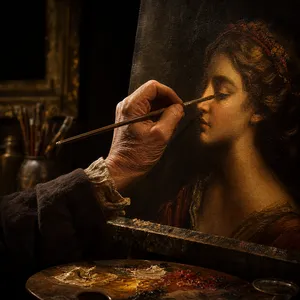
Our studio artists focus on traditional oil painting techniques. Each reproduction is built stroke by stroke with attention to composition, color matching, and surface texture.
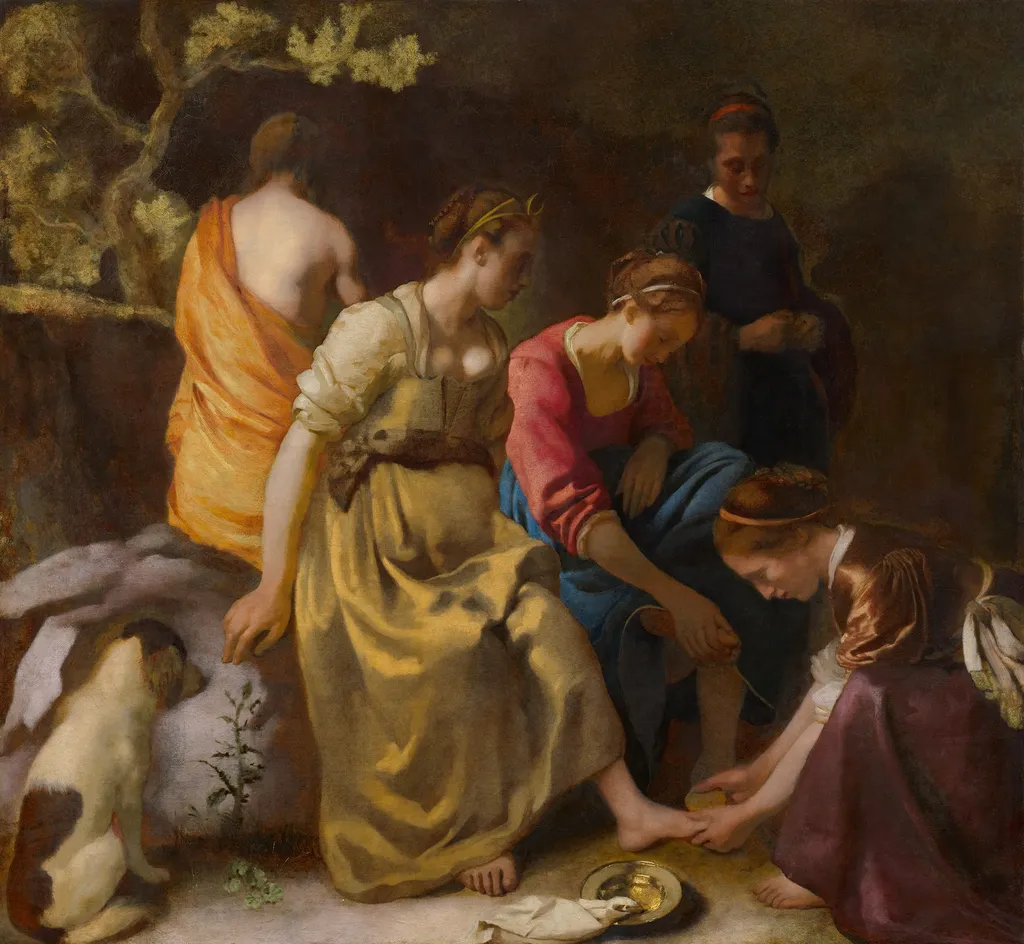
In a world flooded with machine-printed posters, owning something real has become rare. Diana and her Companions is 100% hand-painted from scratch, taking 10–15 days of focused work by experienced artists in the Dafen Oil Painting Village. You'll see tiny ridges of paint and subtle color blending — the beauty you can't fake.
Signed by the artist on the back — a mark of authenticity.
Place Diana and her Companions in your dining room for dinner parties, in your study for daily inspiration, or in a lobby to impress clients. The painting's depth and scale command respect and admiration.
Works with natural and artificial light — the impasto catches every ray.
Most "oil painting reproductions" sold online are giclée prints with a coat of clear varnish to fake texture. Ours is genuinely hand-painted by Dafen masters. No ugly dots, no machine patterns — just authentic artistry backed by a 30-Day Satisfaction Guarantee.
We ship only after you approve real photos — complete peace of mind.
In the quiet galleries of the Mauritshuis, one painting stands as a startling outlier in the career of the Sphinx of Delft. Before he became the master of domestic tranquility and pearled light, a young Johannes Vermeer sought to conquer the grand traditions of history painting. Diana and her Companions, executed around 1653-1654, is a rare glimpse into Vermeer’s experimental youth. For centuries, this masterpiece was actually attributed to Nicolaes Maes, its true authorship only revealed when a signature was uncovered during a meticulous restoration. This museum quality discovery changed art history, proving that Vermeer’s genius was not born in a vacuum but forged through the study of Italianate styles and the heavy shadows of his contemporaries. When you own this hand-painted oil reproduction, you are not just hanging a painting; you are preserving the moment a master found his voice among the gods of Olympus.
Unlike his later works that focus on a single woman in a room, this composition is an ensemble of quiet contemplation. It captures the Roman goddess Diana not in the heat of the hunt, but in a vulnerable, earthly moment of rest. Scholars have long noted the peculiar solemnity of the scene—there are no arrows, no bows, and no signs of the violent myths typically associated with the goddess of the hunt. Instead, we see a master artist’s early fascination with the psychology of silence. The historical significance of this piece lies in its transition; it is the bridge between the grand Baroque style and the intimate realism that would later define Johannes Vermeer. It remains one of his largest and most complex figurative arrangements, making it a foundational piece for any serious collector of museum quality wall art.
To view our hand-painted oil reproduction is to experience the tactile reality of 17th-century technique. Our artists recreate the sculptural surface of the original by utilizing traditional layering processes that a flat print simply cannot mimic. In Diana and her Companions, light does not just sit on the canvas; it interacts with the physical ridges of the paint. Notice the way the light catches the white sleeve of the kneeling nymph—the paint is applied with a deliberate thickness, creating a texture that gives the fabric a life-like weight. This large canvas for living room display allows the viewer to see the "poetry of the brushstroke," where every highlight on Diana’s forehead or the dog’s fur is a physical deposit of pigment.
The interplay of shadow and light in this work is achieved through the "fat-over-lean" method, ensuring that the dark, impenetrable forest in the background possesses a depth that draws the eye inward. By using lightfast pigments, we ensure that the rich ochres, deep blues, and the striking red of the central companion's blouse retain their vibrancy for generations. When light hits the canvas from the side, the small impasto peaks cast microscopic shadows, providing a sense of motion and presence that makes this hand-painted oil reproduction a living entity within your home. It is a sensory experience of museum quality that honors Vermeer’s meticulous color application.
Vermeer’s decision to paint Diana and her Companions was a bold move for a newly admitted member of the Guild of Saint Luke in Delft. He was likely influenced by the courtly tastes of The Hague, where classical subjects were the height of sophistication. However, Vermeer’s "Diana" is different from any that came before. While artists like Rembrandt often depicted the goddess in a state of undress or action, Vermeer chose a scene of "sanctified domesticity" transported to a woodland clearing. The narrative focus is on the washing of the feet—a gesture heavy with Christian symbolism, suggesting themes of purification and humility that were deeply important to Vermeer, who had recently converted to Catholicism upon his marriage to Catharina Bolnes.
The painting also contains a hidden mystery: the figure on the far right, partially obscured in the shadows. Some art historians believe this is the nymph Callisto, whose tragic story of betrayal and transformation into a bear adds a layer of tension to the otherwise peaceful scene. The presence of the thistle at the bottom left—a traditional symbol of earthly sorrow—reinforces the idea that Vermeer was blending mythological narrative with profound human emotion. This hand-painted oil reproduction captures that delicate balance, offering a window into a world where the divine and the everyday coexist in a single, hushed breath. It is a testament to the artistic intention of a man who saw the extraordinary in the quietest of moments.
In an age of digital mass production, there is a profound difference between a copy and a creation. This is 100% hand-painted on premium archival linen—NOT a canvas print, NOT a giclée, and certainly NOT a poster. Every inch of this museum quality wall art is worked by the hand of a skilled artist who understands the weight, flow, and spirit of oil paint. When you run your fingers near the surface (though we recommend admiring from a distance), you can feel the soul of the work. A print is a flat ghost of an image; a hand-painted oil reproduction is a three-dimensional tribute to the original master.
Our process involves a commitment to time and quality. Each piece is hand-painted in 10–15 days, allowing for the proper drying of layers and the careful application of glazes that give Vermeer’s work its signature luminosity. We use only archival linen, the same material preferred by the old masters for its durability and superior texture. This ensures that your investment will not sag or deteriorate over time, but will instead become a cherished heirloom. When you choose a ready to hang hand-painted piece, you are choosing to support the continuation of a centuries-old craft.
A painting of this stature demands a setting that respects its quiet power. Diana and her Companions is an ideal large canvas for living room placement, particularly above a velvet sofa or a dark wood mantle. Its earthy palette of forest greens, muted blues, and warm terracotta tones makes it a versatile anchor for a variety of decor styles. In a traditional study or library, it adds a layer of intellectual depth, evoking the atmosphere of a 17th-century Dutch estate. The meditative quality of the figures also makes it a sophisticated choice for an executive office or a luxury hotel lobby, where it provides a calming focal point amidst the bustle of professional life.
Because the light in the painting is soft and diffused, it pairs beautifully with warm indoor lighting or rooms with large windows that offer indirect sunlight. For those with a penchant for transitional or modern-classic interiors, the clean lines of Vermeer’s composition and his focus on human gesture allow this ready to hang masterpiece to bridge the gap between historical art and contemporary aesthetics. It is a statement piece that invites conversation, reflection, and a slower pace of life, acting as a portal to the golden age of Dutch artistry.
Owning this hand-painted oil reproduction is an act of curation. It is an opportunity to bring the unparalleled light of Johannes Vermeer into your daily life. Whether you are an art historian or a homeowner with a passion for beauty, Diana and her Companions offers a timeless connection to the origins of a master’s journey. Secure your piece of art history today and experience the difference that museum quality craftsmanship makes.
Transform your space with real artistic depth and textured brushwork.
This is a 100% hand-painted oil reproduction of Diana and her Companions by Johannes Vermeer, meticulously created brush by brush on premium archival linen canvas by master Dafen artists.
Hand-painted in 10–15 days • Final photo approval before shipping • Express delivery in 5–7 days
Scale reference: the figure is 180cm tall with an estimated 46cm shoulder width.
Selected size: 20in x 24in (50cm x 60cm)
SKU: LUX-JV-DIANA-AND-HE-007-20X24
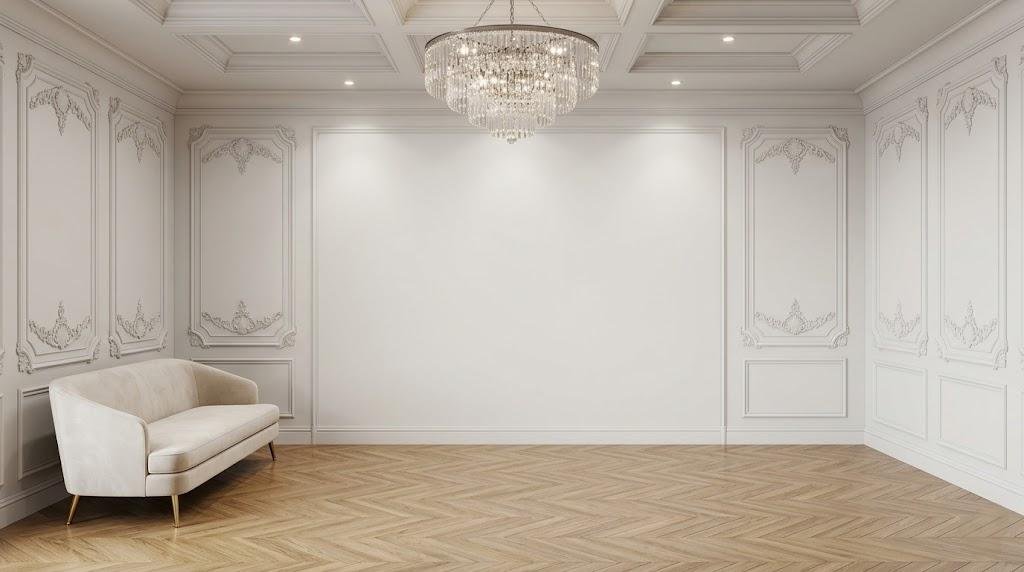
Preview the selected painting inside different interiors. Drag the artwork, adjust the scale, or upload your own room photo before commissioning.
We do not sell flat prints. Every canvas is painted by hand with visible brushwork,
studio review, and material care from the heart of Dafen.
Our studio artists focus on traditional oil painting techniques. Each reproduction is built stroke by stroke with attention to composition, color matching, and surface texture.
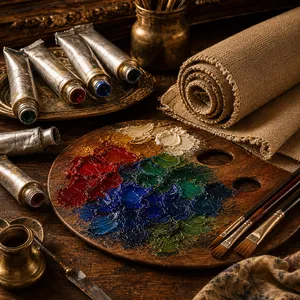
We use artist-grade oil paint and durable canvas selected for strong color, texture, and long-term display in normal indoor conditions.
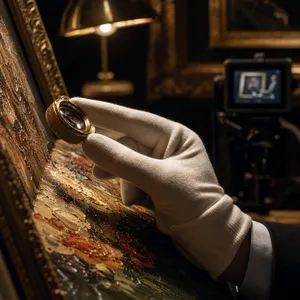
No canvas leaves our studio unchecked. Before dispatch, we review color, composition, brush texture, and packaging readiness, then provide real finished artwork photos for approval when requested.
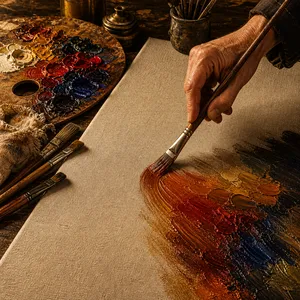
In an era of hybrid giclee prints, we remain a slow-art island. Every piece begins on blank organic linen, painted entirely by hand. We reject digital shortcuts to guarantee true archival longevity.
From a single product image, this section previews how the same handmade painting can look in the studio, rolled for local framing, prepared with frame options, or protected for courier delivery. The artwork shown here is the current product image, ready to be replaced by WooCommerce data later.
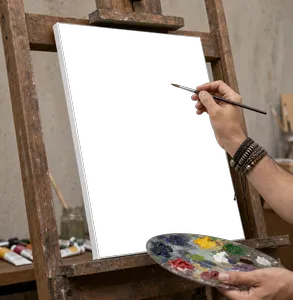
Every DafenArts reproduction is painted stroke by stroke by an experienced studio artist. It is not a print or machine-assisted overlay. The finished piece has layered oil pigment, visible brushwork, and the character of a handmade artwork.

For collectors preferring to collaborate with their local framers, we ship the canvas gently rolled inside a reinforced archival tube. We provide generous blank canvas margins to ensure impeccable stretching without compromising the painted area.
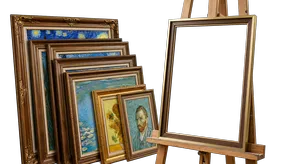
Choose to have your artwork professionally stretched on wooden stretcher bars, finished as a seamless gallery wrap, or paired with a classic frame. These options turn the canvas into a finished, ready-to-display artwork.

Every order is packed for international transit and dispatched via trusted global couriers. Your artwork is protected with packaging matched to the selected finish and supported by shipment tracking from our studio to your address.



Unframed paintings are covered with an archival film, gently rolled, and placed inside a heavy-duty canvas tube.
Stretched and framed paintings are secured with custom foam board constraints and reinforced corrugated boxes.
Clear details about hand painting, approval, delivery, framing, and long-term care before commissioning this artwork.
Each reproduction is painted by hand on canvas by a studio artist. It is not a poster, giclee print, canvas transfer, or printed image with added texture.
Yes. After the painting is completed, studio photos can be sent for approval before dispatch. If a clear order detail needs adjustment, we handle that before shipping.
Yes. Rolled canvas is best for local framing, while stretched canvas, gallery wrap, and framed options are prepared for customers who want a ready-to-hang finish.
Rolled canvases are protected with archival film and shipped in a reinforced tube. Stretched or framed paintings are secured with corner protection, foam board, and a reinforced outer box.
Custom requests can be noted after ordering, including preferred size, crop, orientation, or color direction. The studio will use those notes during production.
Display the painting indoors, away from direct sunlight, extreme humidity, and heat. Dust gently with a soft dry cloth and avoid household cleaners on the painted surface.